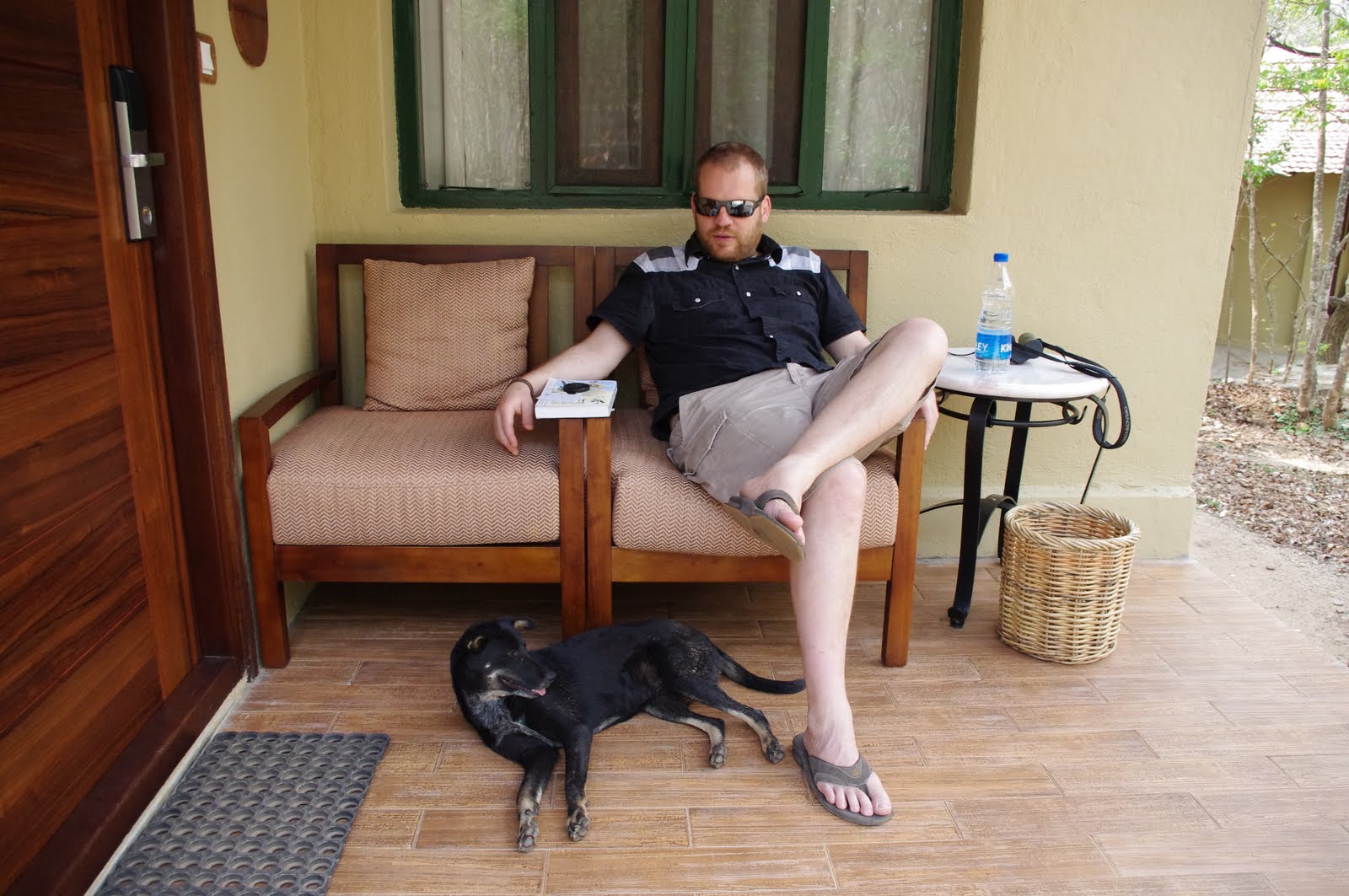
Friday, 27 May 2011

Got my mind on my money

When I was a poor grad student making next to nothing, I kept looking forward to the day when I could use my degree to get a steady job with a steady paycheck, at which point surely I would stop having to worry about finances. Then I did the most financially complicated thing ever, and moved to a foreign country.

As I have written previously, the cost of moving to the UK was quite stressful in and of itself, but my money woes didn't end there. All of my accounts--savings, checking, credit cards, investments--were in the US. Every time I accessed money abroad, I had to pay not one, but two service fees--one to the institution that was accessing my money, and one to my own bank or credit card company for processing a foreign request. When I was using my credit card, this wasn't too bad--usually less than $1 per transaction. But when I was using my debit card, which was occasionally necessary in order to have cash on hand, I was also charged a $5 processing fee in addition to the $1 surcharge. Let me tell you, it does not take long for those $5 charges to accumulate.

Another irritating thing about using plastic abroad is that, unlike the (*ahem* backwards *ahem*) Americans, but like pretty much everyone else in the world, the Brits use a chip-and-pin setup. Each card is implanted with a chip that is linked to the 4-digit pin associated with the card. You don't need to do any card swiping or signature signing; instead, you stick the card into a machine, type in your number, and off you go. It's kind of like the protocol that Americans use for withdrawing money from an ATM, except that you do it everywhere, and for both debit and credit transactions alike. Most places that use chip-and-pin machines also have the facility to do the traditional swipe-card technique, but there are many that do not. Even where cards can be swiped, there's often a moment of surprise and confusion when you hand someone your card; I can't tell you how irritating it gets having to explain, time and time again, that I'm using an American card that only works when swiped. People often haven't been trained in how to process swipe-card transactions, and so you can stand around at the till forever while they swipe your card in various orientations through various slots in the machine. Once it finally goes through, often there is no pen handy, since nobody needs to use them anymore, so the sales assistant has to go rummage around the manager's office to find an implement allowing you to sign your name. Since arriving here, I have had to sign my name in marker, pencil, various immature shades of colored pen (pink! neon green!), and even highlighter.

Obviously, it behooves one to have a bank account at an institution within one's country of residence. This is especially true because, while you can use foreign accounts to withdraw cash and make purchases, you can't set up direct deposits or withdrawals without a local account. This prevents you from signing up for useful things like cell phone plans and magazine subscriptions, or cashing checks in foreign currency. Unfortunately, it is practically impossible to get a new bank or credit card account unless you have some sort of prior credit history, but in a delightful catch-22, you can't have a prior credit history without a bank account or credit card. I applied to, and was rejected from, several banks before I finally wrote an appeal letter and attached recent statements from each of my American accounts, showing that I did in fact have many financial resources. It is so frustrating to have absolutely no credit history in the UK, given that I have fantastic credit history in the US. With all the international business that goes on these days, how can financial institutions from different countries not talk to each other and pass this sort of information along? I would even be willing to pay a fee for this process. Luckily, the bank statements did the trick and I am now the owner of a British bank account.

Interestingly, my bank does not exist anywhere near me in a physical format. They have one main office somewhere up north, but no branches; all their customers do everything online, or via partner institutions (various other banks, or even the post office). It's quite an odd concept, but mimics my previous situation when I was conducting business with my US bank from afar. So, it's not so much of an adjustment for me, but I can see where it might feel odd to many people used to a more traditional setup.

One of the interesting things about finances in Britain is that people are so much more modern about money than we are in the US. When you've eaten at a restaurant and are ready to pay your bill, your server comes over with a little cordless handheld credit card machine and does the whole transaction right at your table. Nobody carries your card off anywhere where they can do suspicious and unknown things to it; all the business is carried out right in front of you, and in a matter of seconds. If you owe a friend money but don't have any cash to hand, you can log onto your bank account online and pay up electronically. Everyone knows their sort codes and bank account numbers, which is all you need to type in so that you can settle your debts. It's so civil.

One thing I really don't enjoy, though, is having to use a card reader in order to complete transfers or make purchases online. This is a card reader:


You have to stick your card into it, type in the associated pin, receive a code number, then type the code number into your computer in order to complete your transaction. This seems excessive to me, given that I've already supplied details that only I know in order to sign into my bank account. Isn't that the whole purpose of pin codes? If they need an extra level of security, why not just ask for a password? Why do I need to stick my card into a machine? If I happen to need to make a transfer/purchase while I am in any location other than my home, I don't have the card reader handy, which means that I can't do it. Obviously, I could carry the card reader around in my purse, but that's just annoying. And what about the 50% of the population (e.g., men) who don't carry purses?

The financial issue that has most recently vexed me is the hurdles that my American banks put up during the process of transferring money between countries. I am paid a monthly stipend by my grant institution, and since the institution is American, they insist that they pay me into an American account. Thus, at least once a month I need to take money from my US bank account and put it into my UK account. When I originally set this process up, I had to look up a bunch of information--SWIFT codes, IBAN numbers, etc.--that is used exclusively for this purpose. You wouldn't believe how far buried these details are on the websites of both UK and US banks.

Every time I make a transfer, I am charged a $35 processing fee, which I find absolutely ludicrous. It's not like I'm paying an armored guard to pick up a suitcase of dollar bills, drive it to the airport, fly it across the Atlantic, take it to my UK bank, exchange it into pounds, and then fly back home again. Everything is done on computers these days--there's not even physical money involved!--and yet I'm being charged to gain access to my own hard-earned money. On top of that, I have to experience the pain of watching 40% of the numerical quantity disappear as my large number of dollars is converted into a much smaller number of pounds.

Transfers get even more difficult if you need to move more than $1000 in one go. I had to do this a couple weeks ago in order to put all my scientific grant funding, which was in an account in the US, into an account at my research institution here in the UK. You have to get a special authorization code in order to do this, but the only way to receive it is to a) have it texted to your American cell phone, or b) sign up to receive a code-generating card (not unlike my British card reader, except it is the shape and size of a credit card). The card costs $20 and you have to wait to receive it in the mail, but this was my only option since I don't have an American cell phone. After waiting and waiting and waiting for the card, I finally contacted the bank to find out where it had been sent. It turns out that they cannot ship the cards internationally, which means that rather than sending it to the current address they have on file for me, they used my previous address, which is my parents' house. Why would they even think I would be there? Why didn't they tell me my international address would prove an issue? Because they just wanted my $20, and because they didn't want me to be able to transfer my money. Because my bank doesn't care about customers--they just care about earning money.

You might wonder why I have even stuck with my US bank rather that switching to a "friendlier" one. Well, I do actually have an account at a more local bank, and I looked into doing all this international stuff through them. But the truth is that, however else my main US bank is lacking, they are actually fairly technologically advanced. It's generally quite easy to accomplish things by signing into my account online, and if I need help they have a 24-7 chat function. At my local bank, I couldn't find any relevant information on their website, they don't appear to allow me to use online features to make international transfers, and account details are updated an an excruciatingly slow rate. It's a terrible trade-off in which I have to sacrifice one type of convenience for another.

Still, my recent international transfer debacle has stirred me into action. I did some research online and found out that the best banks for transnationals are those that operate in both countries. I suppose that's a no-brainer, but because you don't often come across those banks in the US, you wouldn't necessarily think of picking one (not to mention that I am doing all this retroactively--when I first opened my account in the US, I never imagined I would end up living in Britain one day). HSBC has often been cited as the best choice, but when I used their website to find out where their local branches are, I didn't find any in the places where I will actually be when I visit the US. I suppose it's not necessary to have a physical bank--after all, it works okay for me here in the UK--but it would be kind of nice, just in case.I cringe at the thought of what a hassle it will be to move my funds between banks. Not only will I have to finagle my money away from my current bank (doubtless they will find a way to charge me), but I will also have to change financial info in countless of online accounts that are linked to my current bank.

To me, the most amazing thing about all this financial madness is that it really seems like something that shouldn't be so hard. I can log into Amazon.co.uk and buy products from other countries, or ship purchased items abroad, and I can pay for either type of transaction using a credit card from pretty much any country in the world. When I traveled to Australia, India, Brazil, Germany, you name it, I could easily make charges and withdraw money from either my UK or US account. I can turn on Skype or pick up my phone and talk with my parents in the US. We can read tweets, in real time, from people in different time zones. Surely if technology makes all these things possible, it shouldn't be so hard for me to move my own money from one account to another. If it's not the technology throwing a wrench in the works, then it's the banks. And that is something to think about.

Sunday, 8 May 2011

Mother's Day Special--A Bouquet of Cornish Wildflowers


Since I was a little girl, I have had an interest in learning the names of all the organisms in my immediate environment. I've always held a special admiration for people who have mental catalogs of names and natural history information of the wildlife around them; one of my strongest early memories is going on a nature hike with my dad at Conkle's Hollow, in the Hocking Hills region, and being completely impressed by our guide, who could identify many, if not most, of the birds, trees, and wildflowers we encountered.

When I got my first field job in college, I learned to identify many local plants while doing vegetation surveys; when I then went back home to my parents' and grandparents' houses and saw the newly-familiar species in their yards, I couldn't believe how different everything looked and felt. It was like I had walked through a doorway to a whole new magical world, where knowing the names of things and a little about their natural history suddenly gave me a better perspective on the ecosystem as a whole. I liked it.

Since then, I've rarely been without all the appropriate field guides, from ferns and wildflowers to trees and fungi (and, of course, animals, but that's a whole other story since those are related to my scientific research). Before moving from the US to the UK, I put together a donation box full of books that I would no longer need; at first my US wildflower book was included, but then I retrieved it because I just couldn't bear to be without a guide that I had used for so long, even if I would need to refer to it in the future.

Prior to our recent trip to Scilly, I purchased a guide to wildflowers on the islands, and since returning to the mainland I have acquired the beautiful Collins guides for both trees and flowers. Yes, it is time to become really acquainted with my new home.

One of the weird things about Cornwall is how much of the flora is foreign. Indeed, throughout much of the UK there are plants that have been imported from the former British colonies--not just several species that I recognize from my homeland, but also a variety from Australia and New Zealand, the Caribbean, and, especially, southern Africa. Of course, plants were also brought by friends and visitors, so there are species from Asia, the Mediterranean, Scandinavia, northern African...the list goes on. Many of these have since escaped from gardens and farms, and can now be found in what now look like fairly random locations; some are regarded as pests and invasives, while others are considered to be naturalized (the distinction between these being made less by science than emotion).

All of this can make plant identification quite tricky, but also very fun--there is such a huge diversity of species around here that it is not hard to continually find new things; thanks to the fairly mild climate, you can generally find something flowering at pretty much any time of the year; and, because of the frequent morphological similarities of plants in the same family, you can often learn a whole suite of plants together and advance your familiarity with the ecosystem in leaps and bounds.

During our time on the Isles of Scilly, I photographed many wildflowers so I could later study the photos and identify them. Back on the mainland, I've begun using my iPhone to photograph plants while I'm out walking, for the same purpose. My husband tells me this is really nerdy, and I suppose it is. But look at some of the interesting species I've encountered:

(Thrift, Armeria maritima. This grows in vast patches, coloring cliffs completely pink during spring and early summer.)

(Lesser celandine, Ranunculus ficara.)

(Sea radish, Raphanus raphanistrum ssp. maritimus. This is in the rather huge family Brassicaceae, which contains numerous other edible plants--rocket, cabbage, kale, broccoli, cauliflower, mustard, etc.)

(Arum lily, Zantedeschia aethiopica. Although you can't really tell from this picture, these are quite large, like teacup-sized versions of calla lilies; their impressiveness stems not only from their pristine coloring and texture, but also their size.)

(Cuckooflower, aka Lady's Smock, Cardamine pratensis. The first name originates from the fact that these flowers first come into bloom when the cuckoo arrives in the spring.)

(Western ramping fumitory, Fumaria occidentalis. In the background, you can also see the invasive three-cornered leek (aka three-angled leek or three-cornered garlic), Allium triquetrum. Anyone who is familiar with pagan artifacts or has recently seen Thor should appreciate the Latin name of this species--the "triquetra" is a three-part pattern used often in Germanic pagan art (e.g., Thor's hammer) and in Celtic images.)

(Hottentot-fig, Carpobrutus edulis. This is an overzealously productive plant from South Africa, now found crawling its way along shorelines throughout SW England, where it is a serious threat to native plants. The flowers come in both all-yellow and pink-and-yellow varieties. Like many of the introduced shrub-and-chaparral biome species, it is a succulent; this is one of the easiest characteristics to use when determining whether you are likely to be looking at a native Cornish plant or not.)

(Bermuda buttercup, Oxalis pes-capre. This is one of those species that makes you wonder who gave certain people the authority to name plants. This is neither a buttercup nor a Bermuda native; it is actually in the Oxalidaceae family and was introduced from South Africa.)

(Cleavers, Galium aperine. If you were judging solely on flowers, you'd probably not give this plant any awards for beauty. But the whorls of leaves around the stalks are quite delicate and pretty--I'd admired the plant long before it began blooming. I was quite surprised to find out that, despite its dainty appearance from afar, it is covered in clingy hairs that make it feel like a cross between Velcro and a cat's tongue.)

(Yellow iris, Iris pseudacorus. You might be tempted to think this is an escaped garden flower, but actually it's a native wildflower. They appear to like their privacy--I've only ever seen them growing in singles, and then far from their conspecifics. They seem to like wetland areas quite a lot, where they stand out against the reeds and rushes.)

(Smaller tree-mallow, Lavatera cretica, aka Cornish mallow. In case you're wondering what it's smaller than, the answer is:...)

(Tree-mallow, Lavatera arborea. This species is a boon to migratory birds on the Isles of Scilly. In other migration stopover locations, the birds would eat insects in/around budding trees, but Scilly has few of these; instead, the birds can find this food source in the abundant coastal mallows.)

This is only a small portion of the pictures that I took; there are still several that I need to go through so I can make species identifications. After that, there are many more than I need to photograph on my next few walks--and that will only just begin to cover the flowers that have been blooming so far this spring; many more will emerge as the summer goes on.

One thing I am particularly eager to do is become more familiar with the edible plants, since wildcrafting (harvesting from nature) is a fairly common activity here in Britain--particularly of berries, such as sloes and blackberries. Besides fruits, which are fairly obvious targets for wildcrafting, there are also some more subtle treats, such as chamomile and mint (for tea), samphire and rocket (for salads and wilting in hot dishes), onions, garlic, and leeks. Wildcrafting should always be done away from roads, where plants that are exposed to car fumes will incorporate components of the exhaust into their bodies--leading not only to a nasty taste but also potential toxicity. It's also best to avoid harvesting anything that is below waist height, just to ensure that nothing has been bathed in a shower of dog urine. Happily, natural areas in Britain abound, and the country is criss-crossed by public footpaths offering access for both plant-watching and plant-collecting.

I've been told that there is nothing better than firing up a grill on the beach and cooking some freshly-caught fish with some wild leeks and rock samphire, then eating it all straight from the fire. That sounds like something I should make it a goal to achieve before the summer is out--I've been wanting to break out the fishing rod and get my first taste of fishing on the high seas. Stay tuned to find out whether it happens!

---
Since it's Mother's Day, I'd like to give a shout-out to my mother, my two grandmothers, my two mothers-in-law, my sister-in-law, and my cousin, for whom this is the first of many Mother's Days to come. Thanks everyone, and keep up the good work!

Thursday, 28 April 2011

The Isles of Scilly: Where the Attitude is Determined by the Latitude


The Isles of Scilly is a vacation destination renowned in the UK for its beauty and wildlife, but I had never heard of it until I met my husband. He, along with other biologists at the University of Exeter, takes undergraduate biology students there each spring so they can learn about ecosystems and diversity and just generally experience wildlife in their natural habitats. For the past two years I have been lucky enough to tag along and I am finally beginning to learn how to identify enough animals and plants that I feel somewhat useful as an instructor. Last year I either failed to take my camera or just never used it; luckily I had it on hand this year, when the expedition was even more photogenic thanks to five solid days of perfect weather.

The trip started in Penzance, from which we took a ferry, the Scillonian III, to the main island, St. Mary's. The trip is only 45 km (28 miles), but it takes about 2.5 hours. If you have more than just a carry-on, which all of us did, you put your luggage in a cargo container that is loaded onto the ship by a crane on the front deck. Pets are welcome, and usually abound; I am always impressed by the calmness with which the dogs survey their noisy, vibrating, diesel-smelling surroundings. No matter how warm the air and how sunny the sky, the trip is inevitably chilly. This year it was much more pleasant than last year, when it was very overcast and even a bit drizzly. Still, I was shivering despite wearing a t-shirt, a thermal long-sleeve shirt, a hooded sweatshirt, and a thick windbreaker. One day I will find the right combination of clothing to make the trip more bearable. Luckily there is a cafeteria on board, so you can frequently stock up on hot cups of tea.

You can sit inside if you wish, but then you will miss the wildlife sightings that inevitably occur during the journey. Although it is possible to see porpoises, dolphins, whales, and sunfish, I have only ever had any luck with finding birds--storm-petrels, shearwaters, gannets, cormorants, shags, kittiwakes, gulls, and even a few of the auks that the Isles of Scilly are famous for. These are much more common in the Isles than elsewhere in Cornwall, but can be seen along some of the crags near Land's End at the beginning of the journey. Though the puffin is the most common symbol found on Scilly tourist merchandise, the real source of avian excitement is all the migratory birds that land on the islands during the spring, but particularly the autumn, migration. These include birds that have overshot their destinations in the spring and need to rest up before heading back down to France and Spain, those that are on their way south to Africa after breeding during in the Arctic during its short summer, and even North American individuals that have been blown seriously off-course by heavy winds. Among "twitchers," list-crazy birders who traipse all over the country in order to see as many species as possible each year, the Scillies are an essential destination in order to view the real rarities. Last year, we stumbled upon a (relatively uncommon) short-toed lark wandering around the island of Gugh; this year, in the same location, we tried but failed to find a tawny pipit. Both birds were "overshoots," who would eventually turn around and go back south to their appropriate breeding grounds (at least, we hope).

The decks of the Scillonian are also a good place to just generally enjoy the dramatic Cornish scenery:


Like the rest of Britain, the various islands and islets of Scilly (5 main islands, but several hundred land masses overall, depending on your counting criteria) are composed of granite produced by serious volcanic activity several hundred million years ago. The Scillies are considered by many to be the most dangerous maritime habitat in Britain thanks to its jagged rocks and ledges that sit just under the waves; there are anywhere from 800-2000+ wrecks sunk around the islands. The rocks are particularly dangerous because they are not only unseen, but unexpected--the Scillies rest on a plateau that drops off quite suddenly into deep ocean, so unwary sailors may not realize until too late that they have crossed the divide between safe open water and dangerous continental shelf. The harsh winds near the Scillies add another element of danger; many claim that this is also the most exposed location in Britain.

The Isles of Scilly have not always been as isolated as they are now; many thousands of years ago--and as recently as 4,000 years ago--sea level was low enough that Scilly could be reached by foot from the mainland. In fact, it is still possible to walk between some of the islands at low tide--particularly during the spring. Some of the Isles were even covered by glaciation during the last ice age; one Scilly guidebook (The Secret Nature of the Isles of Scilly, by Andrew Cooper) urges visitors to stand on one of the lookout points on St. Mary's and imagine the massive cliff of ice that would have been visible approximately 20,000 years ago. Since the ice melted, all of Britain has been sinking steadily in a process known as "post-glacial rebound." In the Scillies, this loss of height has been compounded by the wearing action of the wind and waves. All told, however, the islands are shrinking at a negligible rate--it is nothing for the next couple of generations to worry about quite yet, barring any additional, unexpected, geological activity.

Our field course set up camp at The Garrison, site of a castle and fortification originally built in the 16th century following the Spanish Armada of 1558. Unfortunately, we were not staying in the castle, which is now home to a hotel called The Star, but in the campsite above the Garrison walls.

The nice thing about the campsite is that many of the animals there are quite tame, so we could get great views of the song thrushes and blackbirds, in particular; this year I even got a female blackbird to eat right out of my hand. Last year I saw my first-ever hedgehog in the campsite, and we got another good look at one this year. Unfortunately, because they are nocturnal, I was not able to get any good photos.

(Male blackbird with the characteristic bright orange Scilly bill; mainland blackbirds have more golden bills. Scientists still haven't figured out what causes this difference.)

According to the last census, approximately 2,200 people live in the Isles of Scilly; most of these inhabit St. Mary's, which is the biggest island. Our field course takes place at the very beginning of the tourist season. The weekend after we depart, the Isles host the World Pilot Gig Championships, which (I am told, but have not personally seen) brings in a massive crowd of participants and observers alike. I cannot imagine how the town copes with all these additional people, because just our group of 30-odd individuals depleted stocks in the grocery store (particularly on the evening that we treated the students to a barbecue) and made all the delis, pubs, and other eating facilities quite cramped at mealtime. This year we happened to be on the islands during Easter weekend, as well as during the weekday when cruises stop by to let travelers spend an afternoon on the islands. I am not entirely sure what all these people usually do when they visit Scilly, but shopping appears to be high on the priority list. Insanely, there are also a good number of people who sit on the beach and try to get tan; some even wander into the water. Given how uncomfortably cool it is even at the height of summer on the relatively less exposed mainland Cornish beaches, I cannot imagine how unpleasant these activities must be.

In my humble opinion, the only way to fully enjoy the Isles of Scilly is to explore them, a process that requires both good walking shoes and a boat. During our stay, we hiked around the circumference of St. Mary's (approximately 5 miles), which only takes a couple of hours but gives you plenty of opportunities to catch amazing views of the water, the geology, the flora, the fauna, and some of the lovely local cafes selling fresh-baked goodies and Cornish ice cream.

You will also pass several places of cultural interest, such as studios selling local art and historic buildings and cemeteries.

(The cemetery at Old Town.)

The islands have been inhabited since the Neolithic (4500-2200 BC), evidence of which is provided by many megaliths, menhirs, and stone circles that can be found dotting various islands. Our hike around Gugh took us near both a standing stone and an old, excavated, burial chamber called Obadiah's Barrow. Interestingly, though this one dates to the Neolithic, it was reused during the Bronze Age, as evidenced by the mixture of standing-stone and horizontal top-stone architecture. Sadly, none of its standing stones are still actually standing, the last having been intentionally knocked over during the Victorian times in order to prevent its accidentally falling on top of a passer-by (the British obsession with health and safety obviously has a long and illustrious history). There would be many more such similar sites if the stones didn't make such attractive building materials; modern inhabitants have relocated many of them for use in walls and foundations.

(Obadiah's Burrow on Gugh Island.)

As I hinted at earlier, Scilly has a wide variety of wildlife that is special in one way or another. This includes not only the migrants that pass through at various times of the year--not just birds, but also moths and butterflies on land, and whales and turtles in the water--but also full-time residents. Scilly is a strange mixture of "native" and "introduced" species, though how exactly you draw the line between them at this point is anybody's guess, given how many things have naturalized over the years. Over the years, a variety of plants and animals have found their way to the islands through intentional introduction (particularly to the gardens on Tresco) and also by some mixture of accident and luck (for instance, stick bugs established a population after hitching a ride on some of the introduced plants). For a while, the main source of income in the Isles was flower farming, since the (relatively) extreme southern latitude meant that Scillonian farmers could beat their mainland competitors to the punch each season. Daffodils were a particularly big crop, though several other species were also popular. Several varieties of each species are Scillonian specialties, found nowhere else. However, though you still run across many of these flowers growing in farm fields and wherever else they manage to put down roots, this livelihood is no longer as important to the local economy as it used to be.

Other than the "true-" and "now-native" plants, there are many escapee "invasives" growing rampant across the island--in particular, the South African hottentot fig (the quotation marks indicate how difficult it is to distinguish between these three categories, given that all three were, at some point or another, an "invasive"). The fig may not be ideal for the local ecosystem, but at least it is attractive.

(The bright green plant with the yellow flower is the hottentot fig; the more spindly, silvery-green plant growing amongst it is rock samphire, an edible plant that must be used sparingly in dishes because it is so salty.)

One of the big questions is why some of the intentional introductions were made at all. For instance, Spanish bluebells can now be found growing all over those islands with enough soil to make it possible, but it is a mystery why the inhabitants felt this was a necessary addition to the ecosystem, given that there was already a perfectly lovely native bluebell growing in all the same places.

(Native bluebells growing on Scilly. They are smaller, have a deeper purple color, have a more closed and rounded bell shape, and the flowers all tend to hang to the same side of the stem.)

(Another local specialty is the sea holly, which we routinely find on Gugh and St. Agnes, but which does not thrive as much elsewhere. This particular bit of growth managed to survive a hurricane, popping back up out of the sand several weeks after the storm.)

Although many people travel to the Isles of Scilly specifically to enjoy the botany, it is much more common for tourists to seek out the avifauna. One particularly beloved destination is the Western Rocks, which provide breeding habitat for gulls and--more excitingly--auks. The Isles are home to three species of auks: the guillemot, the puffin, and the razorbill. People really seem to focus on the puffin, probably because of its characteristic orange and yellow facial coloration, but its close relatives are also quite sleek and attractive. Both years we have gone looking, we have seen all three species, but this year was definitely a bonanza.

(A lone puffin, the only one brave enough to sit near our boat after the rest of its flock took off.)

(Mostly guillemots, but also a razorbill or two. The Guillemots are the ones that are browner and have more delicate bills; the razorbills are blacker and have a thicker bill with a white stripe.)

One of the reasons that so many species can do fairly well on Scilly is a lack of predators. The islands have no foxes, few rats (some islands with none at all), no resident buzzards or hawks, no snakes, and no serious problems with feral cats or dogs. Perhaps the most threatening predator is the hedgehog, which is known to eat the eggs of nesting birds. Despite this, there are still some mysterious declines in breeding success, including that of the lesser black-backed gull, the kittiwake, and the storm-petrel. Various bird surveys are conducted at regular intervals to collect as much data as possible on Scilly species, in the hopes of protecting those colonies that are doing well, and re-establishing those that have begun to fail.

Although it is easy to get distracted by the plants and animals, which are in such obvious and colorful abundance, it is important to note that Scilly also offers ample opportunities to enjoy special insects, such as the oil beetle, the indigenous Scilly bee, and some very rare species of Scillonian ant, as well as a prodigious amount of sea life. Fossicking (or rock-pooling), that beloved British pastime, can be conducted at numerous locations around the island, yielding a variety of crabs, fish, mollusks, invertebrates, and algae. Unfortunately, none of these species is very easy to photograph once you've stuck it in a bucket of seawater to keep it happy while you examine it up close, so all I've got is a photograph of a very promising-looking pool waiting to be investigated.


(There are also some interesting bits of flotsam and jetsam. A few years ago a container ship wrecked in Scilly and for the next few weeks, islanders were able to pick up free samples of tobacco and superhero costumes, among other things, after they'd washed up on shore.)

The Isles were stunning during our overwhelmingly sunny visit this year, and still quite attractive during our previous trip when it was cloudy most of the time. There is actually little variation in air temperature throughout the year--less so even than in mainland Cornwall, which is milder than the rest of the UK--but the unpredictable sea breezes make a huge difference. Depending on their strength and the direction from which they are blowing, they can either be pleasant or really, really painful. The key to enjoying your stay on the Scillies is to pack for every contingency--thermals, sweaters, and waterproofs are essential even when you go in the middle of summer. A hat and sunglasses are also necessary, since you'll get glare from above when on land, and below when on water. Because the paths can be quite rocky and very steep, it is important to have good, sturdy shoes; my well-worn hiking boots are, shall we say, on their last legs, and walking became a bit painful both for my feet and my knees. The most important pieces of equipment are binoculars and a camera, because this is a place where you will want to see far and wide, then document it so you can enjoy it again later.

Thursday, 21 April 2011

India 2011: Back to Bangalore...and Beyond


It had taken us about 2 hours to get from Bangalore to Mysore by train, then another couple from Mysore to Bandipur by taxi, so we knew that our taxi ride back to Bangalore would last at least 4 hours. It's strange for Westerners to imagine that it's both possible and affordable to hire a taxi for such a long trip, but it really is the best option--buses would be cramped, hot, and slow, and there is no way that you'd want to rent a car and do the driving yourself. A trip of that length would easily cost several hundred dollars in the US, and the equivalent amount of pounds in the UK, but we only paid about $50. This is an especially good deal when you consider that our driver had to start the day by driving 2 hours from Mysore to Bandipur to pick us up, then end the day with another 2-hour drive back there from Bangalore.

I had to request a toilet stop as we were nearing Mysore, and I did so just in time for us to pull over to what I fondly refer to as a "pay-and-pee." Whatever niceties India may be lacking--reliably clean water, air conditioning, consistent electricity--at least they have public toilets; why is the US the only country I've been in where it's a miracle to find a restroom that doesn't involve a gas station or a McDonald's? Of course, the cleanliness of the facility was a bit lacking, and there was no toilet paper, but that wasn't worse than anything I encountered in Kenya, and, in any case, it only cost 2 rupees, so I got pretty much what I paid for.

Shortly after we left Mysore, our taxi driver pulled down a TV screen and put on a DVD of Bollywood hits for us to watch. Even my husband had to admit that the music was catchy, but it was hard to imagine how anyone could find the goofy Bollywood dancing very cool. We noticed that there were 2 consistent features of nearly all the videos: 1) frequent changes of scenery, often involving unusual locations such as the middle of a 2-lane road through a desert, and 2) frequent changes of clothing, often involving surprisingly revealing clothes for the ladies and surprisingly effeminate (to Western sensibilities) outfits for the men. Once the DVD was over, our driver put in a CD, but when this started skipping we were plunged back into quiet.

This didn't last too long, though, since by that time we were nearing Bangalore. Frustratingly, it took about an hour for us to finally reach the IISC after first entering Bangalore; the city really is huge, plus the roads were packed with traffic. I think our driver was receiving directions on his phone, because he kept pausing, reading text messages, and then making a sudden change in our route. I was pretty impressed that he was able to navigate, without any discernible wrong turns, both Mysore and Bangalore, not to mention all the remote roads between Mysore and Bandipur; I would have been overwhelmed by tackling any one of those locations, let alone all three of them.

Pretty soon we were reinstated in our quarters at the IISC guest house--good old room 37. Luckily, the electricity was back on, but the wi-fi still hadn't been fixed, which was a bummer because we'd been planning to use that in order to coordinate with our hosts. We tried to find an internet cafe when we went into town for lunch, but failed on that account, as well. To add insult to injury, the restaurant we'd chosen was having some technical glitches with their computerized ordering system, so our food took forever to arrive and then it took even longer for them to produce a bill. While my husband returned to our room to coordinate our schedule for the evening,I stopped by Fabindia one last time in order to stock up on a few more gifts.

Later that evening we returned to our hosts' house for a farewell dinner. We met the cousin of the family we'd taken the walk with in Bandipur, and were surprised to discover that he had no idea who we were talking about. However, he told us that his family was quite large; plus, "cousin" might have been used to indicate "second cousin," or even "third cousin" or beyond (many of my husbands' African "cousins" are actually just close friends of the family, so this didn't surprise me too much). Still, for someone who has a family as small as mine, it's amazing to think of having so many relatives that you could actually lose track of them.

We had an early night because our trip the next day started quite early--we had to be at the airport by 7:30, so we needed to leave by 6:30. It was sad to depart the IISC for the last time, even though we were looking forward to swapping out those hard, single beds for our soft, king-sized bed at home. I often find that I'm ready to go home after a week or two of vacation, but even with my sickness I had been happy enough in India that I could easily have stayed longer. However, both my husband and I had to get back to the grindstone at work, so an extended stay was not an option.

It turned out that we'd been overly-cautious in timing our taxi ride, since the roads weren't too busy that early in the morning. We got to the airport with plenty of time to sit and have breakfast; I even had the opportunity to shop around and purchase some snacks--and, more importantly, a new book--for the flight home. Unfortunately, the leisure of the first leg of our journey was pretty much the polar opposite of the frenzy we experienced during the second leg.

Our first flight had been from Bangalore to Mumbai, and our second flight would go from Mumbai to London. Alas, Mumbai's domestic and international airports are not in the same place, so we had a little over an hour to travel between the two airports, check in again, go through immigration, go through security, find our gate, and board the plane. The airline provided a free shuttle service between the two terminals, but the airline staff advised us that the next available shuttle would not get us there in time; instead, we were advised to get our own transportation--very helpful. We dashed outside to find a taxi, but while there appeared to be many dropping travelers off, there appeared to be none taking travelers away. We then ran over to the auto stand, where we were told that an auto could get us to the terminal in 15 minutes. Less than 10 minutes later, we arrived at the destination, only to discover it was the wrong one; the driver thought we wanted the second terminal at the domestic airport, when in fact we wanted the second terminal at the international airport. He then told us he could still get us there, but actually what he had in mind was driving us to a taxi company and switching us over to the form of transportation that was more likely to make our deadline.

(A view of the crowded airport roads, as seen from the back of our auto.)

My husband was feeling extremely tense, because by this time we were looking at 30-45 minutes to accomplish a trip across one of the crowdest cities on the planet, followed by the intricacies of the flight check-in process. However, I have to say that I was feeling pretty "Zen" about the whole situation. We'd either make the flight or we wouldn't, and at that point there wasn't much we could do to affect the situation. I only point out this difference in my husband's and my attitudes because it is pretty much the opposite of our normal states of mind--usually I fret, while he calmly floats along. I was so relaxed that, while we sat at a red light, I even did some nature-watching from the back seat of our auto, from which I saw a mouse hop out of our vehicle, dash under the car next to us, then run back again. It was very peculiar.

At the taxi stand, we were quoted an exorbitant price for our trip to the airport. It was not only more than we'd normally willingly pay, but it was also way more money than we had--we'd used up all our cash because we didn't think we'd need it. To make matters worse, they were demanding that we pay up front. Because we didn't really have the time to argue, we agreed to a ridiculous sum of money (in India, anyway--it was still cheaper than getting a taxi to the airport in the US or the UK), and had the driver take us to the nearest ATM. After waiting in line behind seemingly the slowest customer ever, I arrived at the machine only to find that it was broken. I dashed out to the car and asked the driver to take us to another one, but my husband had the wherewithal to ask if he would accept British pounds instead. After a little convincing, the driver agreed to accept a 10-pound note and our 200 remaining rupees, which not only added up to the asking price but actually exceeded it.

During one of our previous trips through an Indian airport, I'd noticed that they only shut the gates to a flight 20 minutes before its scheduled departure, which is about twice as late as when they shut the gates at Western airports. I remember thinking to myself that that was a pretty generous rule. I never imagined that I would personally benefit from it. At the international airport, we ran over to the Kingfisher Airlines desk, where the customer service person calmly and casually looked over our paperwork, then gave us immigration forms to fill out and directed us to the immigration room. He seemed very unconcerned by the fact that our flight was supposed to leave in the very near future, which was encouraging.

We stopped briefly to fill out the paperwork, then entered the immigration area, where we were waved through even more quickly than we had been on our way into the country. It's amazing that developing countries have such a reputation for tying you up in red tape at the worst possible moments (which they do--we've heard plenty of horror stories from colleagues who work in those places), because it's also true that they can occasionally be way more accommodating and speedy than their colleagues in the West. We next entered the security room, where we had to take the stamped airline security tags off all our carry-ons and replace them with blank tags that could be stamped during the new round of security processing. This is the kind of pointless stuff that is required when passengers have to move between multiple different airports in order to complete a single trip. Of course, just when I least needed it, someone forgot to stamp one of my bags, so I had to go back through the line again before the security woman would let me exit the area and rush to my gate. By that point even I had begun to feel agitated, because we were so close to making it and yet still so close to disaster.

Luckily, after all the rushing and sweating and swearing, we got there. We weren't even the last ones on the plane; about 5 or 10 minutes after we sat down, a half dozen other people (some of whom I recognized from our previous flight) straggled on, and I suspect that they had opted to take the shuttle from the domestic airport. All in all, even though I was channeling Buddha half the time, it was one of the more stressful travel experiences I've had; however, since it turned out well in the end, I can't complain too much. Still, if/when we go back to India, we will definitely avoid the Mumbai airport, unless it is actually our destination--or a new combo airport is developed so that we don't have to drive across the city in between flights. [Oddly enough, just the night before my husband and I were having our travel nightmare in India, my parents had experienced one of their own in Florida.]

During all of our rushing around in Mumbai, I had worked up quite an appetite, so I was happy to be served lunch shortly after our flight took off. Though my husband chose the "continental" meal, I indulged in the Indian option--just for old times' sake. Unfortunately, the flight wasn't even nearly the last leg of our trip. After we arrived at Heathrow (at about 6 PM), we had to take a 30-minute train ride to Paddington Station, followed by a 2-hour train trip to Exeter. At that point my husband had to walk, in the dark, to find where he'd left the car, then navigate around a bunch of closed streets (due to overnight road construction), and finally return to the train station to pick me up. From there, we still had another 2-hour trip back to Falmouth, in the middle of which we encountered yet more late-night road construction, and were routed through a 10-mile stretch of windy Cornish roads.

Living in Cornwall is pleasant most of the time, but fairly annoying when traveling anywhere else. It is such a pain to have to begin and end every trip with a 5-hour journey from lands' end (almost literally) back into "civilization." By the time we got home, it was well past 1 AM, and by the time we got into bed, it was well past 2; we'd been awake for over 24 hours straight. As fun and exciting as it is to travel somewhere as exotic and stimulating as India, there is nothing like a long and inconvenient journey to renew your fondness for the comforts of home.

Wednesday, 20 April 2011

India 2011: Bandipur National Park


By an odd coincidence, the same company that owned and ran our hotel in Mysore had recently acquired the hotel that we booked in Bandipur National Park, so on Day 10 we left one Windflower Resort, drove 2 hours, then checked into another. Because it was located in the middle of a national park, Windflower 2 was not quite as "resort-y" as Windflower 1--sadly, there were no Ayurvedic massages on offer, or any wi-fi or television--but the facilities were just as nice. In fact, our cabin had been refitted so recently that you could still faintly smell the paint and wood glue, and it was just as beautiful--in a more rustic, "comfortable" way--than our lodgings at Windflower 1:


Also, though photographs do not do it justice (and, hence, are not shown here), the bathroom was lovely, with skylights and neat little Chinese rock garden-like areas on either side of the shower. The only thing that was subpar was the view off our back porch; the property was obviously still a work in progress, and our "back yard" was rather denuded and a bit rough. Even so, it was a cool, quiet place to sit in the shade, and of course birds don't judge aesthetics the same way that we do, so it was also a good place to watch the feathered wildlife.

Within a few minutes of our arrival, we had managed to make friends with one of the dogs that lived on the hotel property; they weren't quite strays, since they lived there permanently and were tolerated by the hotel staff (likely because they would offer a timely warning of the presence of any tigers), but they were also not domestic in the Western sense of the word. Most especially, they were not animals that ever got much from people--most of all love or attention. All my husband had to do was say "Hello there!" in a friendly sort of way after being surprised by one young dog who had been hiding under a chair by the pool, and he earned a friend for life. She was young enough that she hadn't yet grown in to her oversized paws, but old enough that she knew she wasn't allowed to follow us into our cabin or the outdoor eating area. But she was content to sit on our porch and wait for us to come back out and give her some love; in fact, she curled up and slept in one of our porch chairs all night.

The pool, in addition to serving as a nice spot to make canine friends, was also a good place to spend an afternoon soaking up rays, which we did pretty much every day during our stay in Bandipur. It was the first time either of us had ever gone swimming in an "infinity pool." I didn't really feel as though I could keep on swimming to the horizon, but it still was kind of neat to have a more unobstructed view of the woods around our park.


Another interesting feature of our hotel was that it was in the path of at least one herd of cattle, who walked through the property on their way to the feeding ground every morning, and then back again late in the afternoon. It was weird to be sitting on the porch of our luxury hotel room, and then suddenly see a cow meander past, occasionally stopping to grab a mouthful of greenery.


Of course, when your hotel is situated in the middle of a national park, there is bound to be some interesting wildlife in addition to all the domestic animals. Every night after the porch light came on, geckos came out to perch on our walls and hunt. They also bark, which I didn't know until my husband pointed out that the noises I'd interpreted as some sort of frog or nocturnal bird were actually male geckos having vocal duels. Who knew? There were other reptiles running around near our cabin, including some brightly-colored agamids that I tried, but failed, to photograph one morning. To my surprise, when we went to lunch a couple hours later, we ran into a very large male of the same species I'd seen earlier, lounging photogenically outside the restaurant:


The restaurant was also a favorite spot for the local house crows, who obviously knew that many tasty snacks were to be had at the end of the meals (or even sometimes in the middle of them, if the diners turned their heads for a moment). My husband and I had a good time watching the crows coordinate with each other--often one pioneering individual would show up and deliver a bizarre and highly variable vocal performance; this attracted friends, who would perch in various spots around (and sometimes inside) the restaurant, eagerly watching for an opportunity to sneak off with leftovers. More often than not, all they got was a half-full package of butter, which they seemed to like better than nothing at all.


While we were in Bandipur, we saw rain for the first time since our arrival in India. Rather than being a disappointment or an inconvenience, this was actually kind of nice; the dramatic downpours--sometimes with rumbles of thunder--were a refreshing alternative to the annoying misty rain that we always get in the UK. The days could also get quite hot in Bandipur, and the cool breezes that accompanied the precipitation felt very pleasant.

Over the course of two days, we took 3 driving safaris and 1 hike, yielding a total of 2 dhole (wild dogs), 3 elephants, a half dozen mongooses, a couple gaur (bison), a few hundred chital (spotted deer), a barking deer, a dozen wild boar, several sambars, and lots of birds. We didn't encounter any leopards or tigers, but even though that was a possibility, it wasn't really something that we expected. Our evening safaris were quite pleasant because all the vegetation in the park took on a lovely golden hue in the setting sun. This was also the only time that we saw elephants. The morning safaris were more exciting because that was when the animals were most active--we could both see and hear them much more easily. Unfortunately, morning is also when my bladder is most active, and during our first AM safari I finally had to hop out of our jeep to find a place to pee. As was the case with my experience in the Masai Marai in Kenya, peeing in the bush was a rather daunting task given the very real possibility that a large, hungry, predatorial cat might be lurking in the shadows. Luckily, the park was full of deep holes that had evidently been installed to catch rainwater during the monsoon season. I was able to jump down into one of these and relieve myself out in the open, yet still out of sight of my safari-mates. It was a lot better than crouching behind the bumper of the vehicle, I can tell you that. I'm just glad I could continue my trend of urinating in the field on every continent I've visited; I'd hate to have a trip where I couldn't indulge in that little pleasure.

During our first two safaris, we shared a jeep with other tourists; on the first night it was two American engineers who were staying at our hotel after attending a conference in Bangalore, and on the second night it was a family that had traveled to Bandipur from elsewhere in India. Everybody was quite pleasant and we shared stories about our travels and passed on whatever wildlife ID information we could offer. All the same, it was a pleasant surprise to get a jeep all to ourselves during our final safari. This offered me the opportunity to ask the driver to stop so I could do some birdwatching--something I feel too guilty to ask for when there are other people around who are likely to be much less interested in avian wildlife than I am. As was the case with the safari drivers in Kenya, our Indian guides were very focused on the macro wildlife (elephants and tigers, in particular), but were quite happy to linger for birds after we made it clear that those were just as interesting to us. Unfortunately, one side effect of this was that the drivers then paused in front of nearly every peacock we passed, and there was a seemingly infinite supply of those in the park:


As had been the case in Kenya, I developed an affection for the porcine wildlife, which are so ugly you can't help but love them:


Lest anyone think I am single-minded, I had better state that I was looking out for interesting plants, as well. Unfortunately, Bandipur is so dominated by invasive lantana (a plant that is causing habitat problems throughout much of India, in fact) that it was often the only species I could see. However, one notable species was the aptly-named "flame of the forest":

(If you look closely, you might just be able to spot a bonnet macaque sitting amidst the flowers.)

Our walking safari was something that we stumbled into, so to speak, after the American engineers told us that one had been arranged for their group. Evidently this was not something that was routinely done, but the hotel staff were nothing if not accommodating, and they volunteered to throw something together for us, as well. We wound up going with another family who were staying at the Windflower just a couple cabins away from us. After a few minutes of chatting while we walked, we discovered that we had an unanticipated social connection: The cousin of the wife/mother was someone who worked at the IISC and was scheduled to meet with my husband after our return to Bangalore. What were the chances? One of the two children in the family was a budding biologist, so my husband took special care to point out all the wildlife he knew and tell her about the more interesting aspects of their life histories.

It was, yet again, a lovely evening to be out and about. With the exception of a couple waterbirds, we didn't see too many new species, but it was pleasant to enjoy the countryside on foot rather than in a vehicle. We also had some illuminating cultural experiences. Our destination was a local watering hole, and on our way there we walked through a small village. The people were in the midst of tending their lifestock and cooking dinner, so we got a small taste of what "real" life is like for a vast portion of the Indian population.

(A shepherdess pumping water for her goats and cow. One of the female goats--possibly the one on the far left--had a couple of kids that kept jostling into position for a suckle. They were ridiculously cute, prompting us to stop for the photo op. I would love to know what was going through the villagers' minds as they watched us photograph livestock. A rough equivalent would be if Indian tourists to the UK took pictures of the deli or dairy section at the grocery store. After all, what we might think of as a "pet" is what they use to get milk and meat.)

Between the village and the watering hole was a small ranger station, where we were told that we couldn't go any further. Our local guide informed us that the ranger was worried that we might be in danger of experiencing wildfires. However, he also indicated (although everyone but me seemed to know already) that this was just an excuse to put us in the position to offer a bribe. Sure enough, after a few bills had exchanged hands, the ranger reconsidered and waved us onwards. I can't imagine living in a country where bribery is routine (though it is much less routine in India now than it was in the past); think of the things you'd never be able to do if you didn't have enough money, and all the things that would suddenly become possible if you did.

On the way home from the walk, I found myself walking with our guide, who spoke very little English. However, he painstakingly managed to put together enough words to ask me about what it was like to travel to India from the UK. He also inquired whether "the Sir" and I ("the Madam") had any children. When I told him "no," he asked if it was because I "had the job." At first, I thought he said I had "done a good job" (which I interpreted as an odd joke), but then I realized that he was asking whether I had no children because I had chosen to work instead. I found that question to be very revealing of life in modern India, where women are increasingly foregoing families (or, at least, starting them much later) in order to establish a career. In other words, it's becoming very Western in that respect.

During this conversation, our party picked up an additional member--another young, friendly, and ridiculously needy dog. Although she started out tagging along with the kids in our group, she must have used her canine canniness to discern which among us was weakest; she soon was cuddling up to my husband and I. She was in for a rude awakening once we reached Windflower, where the resident dogs quickly established their dominance. Rather than see her come to any harm, my husband and I escorted her safely to the edge of the premises so she could escape without any damage.

However, when I ventured out early the next morning in order to do some birding, who should I spy running towards me but that very same dog, who'd obviously passed whatever test was necessary to earn her place at Windflower. Like her predecessor (whom I'd dubbed "Friend #1"), Friend #2 was eager to sit with us on the porch and receive some attention and affection:


If you love animals, which I do, it is very difficult to go to developing countries and see so many feral cats and dogs. It is especially painful when you observe how desperate they are to bond with someone and loyally follow at his/her feet, without asking any questions. More than once, I fantasized about arranging veterinary care and relocation to the UK.

After a while, Friend #2 reattached herself to our walking companions from the previous night, which was convenient because my husband and I needed to go to breakfast and were worried that she would try to follow us in. After breakfast, we walked down to the pool to have a peek at a strange toad I had seen there earlier in the morning; there, we stumbled across Friend #1. Unfortunately, we could only spare a few minutes of attention, because we were due to start the long taxi ride back to Bangalore.

On the way out of the park, we stopped near the ranger station so I could photograph one of the huge abandoned termite mounds out front. I hopped out of the car in order to get a closer shot, then received a surprise when I turned to go back:

(Bonnet macaque lounging in the luggage rack of our taxi.)

At first she was sitting on the hood of the car, but after "decorating" it, she relocated to the roof, from which she could bend over and stick her face through the open window. She seemed very unperturbed by my presence, and didn't even look at me as I cautiously edged closer. Because she was perched over the back seat door, I had to stand right next to her, and then bend underneath her, in order to get into the car. I was a little worried that eventually she would get alarmed by my proximity and then become violent, but these worries were unfounded. In fact, she didn't even seem to care when the driver started the engine and began pulling back onto the road; only at the last minute did she lazily hop off the car and wander over to the side of the road. This encounter capped a very animal-filled morning, which provided a fitting finale to our equally animal-filled stay in Bandipur.

---
Coming up: long journeys by taxi, on foot, and by air


Tuesday, 19 April 2011

India 2011: Bangalore to Mysore


The dearth of electricity and Internet was not miraculously fixed overnight prior to our departure for Mysore, which was one reason that we were excited about leaving town--we knew that free wi-fi awaited us at our destination. More importantly, we were also looking forward to upgrading our lodgings from "dorm room" to "deluxe," the only class of accommodation that the hotel could book us into when we called for reservations. But first, we needed to hop our train out of town.

If you are like me, then your first reaction to reading "train in India" will be to picture this:

I'm sure this kind of situation must happen fairly often, otherwise I wouldn't have found so many pictures like this on Google. However, this was not at all the experience that we had during our two-hour ride south to Mysore. In fact, our journey was similar in many ways to ones that I have taken in the UK; in fact, in many ways it was better. First of all, when we arrived at the train station we were able to hire porters who, for a ridiculously cheap price (less than $5), carried our huge duffel bags through the crowded station, located our train, and got us installed in our seats. I was glad to have the help because a) my bag was really heavy and b) if we'd had to find the train ourselves it might have left without us, since although we were assigned a platform letter and car number, nothing actually seemed to be organized in a logical alphabetical or numerical order.

Another upgrade from the UK train experience was the amount of leg room we had. Not only were our knees not touching the seats in front of us, but we also had foot rests and cup holders that could be used even when our tray tables weren't folded down. Our car was much more full than British trains usually are (with the exception of maybe one or two rides that I've taken near London during peak travel), and it did look a bit more worn. However, we soon discovered that we were to be given a complimentary bottle of water and two-course meal; had we desired, we also could have taken advantage of the complimentary newspapers. All of this for tickets that cost approximately $6 apiece.

Train tracks inevitably run through the poorer parts of a city, since nobody would choose to live near all that dust and noise unless they had to. Thus, we got a better look at the "real" Bangalore, including a few slums. However, one thing I noticed was that even the most run-down neighborhoods contained buildings with bright, cheerful paint and ornate facades; the inhabitants might not always have enough money or food, but at least they don't have to look at soulless gray concrete walls the way they would have to if they lived in similar neighborhoods in the West. These areas also contained shrines, which sat rather pristinely amidst the everyday squalor around them; the locals clearly placed religious obligations high on their list of priorities despite the fact that it must have required real financial sacrifice to keep those places in such good shape all the time.

Outside the city, we encountered some fairly dramatic habitat--giant rocky hills and cliffs, some of which I would have been tempted to call "buttes" had I been in the Western US. We passed a magnificent building under construction--something that looked like a modern palace or perhaps some sort of important government building. It caused me to remark to my husband that Indians really do know how to do impressive architecture, a statement that would receive further support once we arrived in Mysore and got a look at the palace there.

For a while we passed through countryside that looked fairly similar to what we had seen between Bangalore and the Rishi Valley, but soon enough it started to become greener and wetter. I am not sure what crops were being grown close to the city, but they were all things that could go for a while without water. Further south, however, we encountered rice paddies for the first time, full of egrets and ibises that waded through the several-inches-deep water in search of tasty arthropods. There were many farmers in the midst of plowing their fields the with a cow or two hooked up to a harness. It was extremely muddy work and it didn't look too fun for either the farmers or their livestock. Nor did the farmers' wives appear to be having a good time as they scrubbed laundry by the creek- and riverbanks. However, I would have loved to have been able to stop and take a picture of the clothing they had spread out to dry--no two pieces were the same color, and they formed a dramatic and vibrant patchwork against the bright green background of the grass. We even passed a few people in the midst of bathing, though luckily we didn't catch anyone in the buff.

We arrived in Mysore earlier than we anticipated, which was a nice surprise. We were met by a taxi driver that our hostess had arranged for us, so all we had to do was stand back and let the driver and his assistant pack our bags and usher us into the back seat. In this car, the standard Ganesha decoration had been placed in a surprising way:

(That's Buddha on the left and Jesus in the center, under the rosary. We also eventually encountered a car that featured Ganesha, Jesus, and Buddha; the driver was obviously wanted to cover all the bases. There was also a reference to Jesus on the taxi company's business cards.)


As we drove through town, the driver and his aide--well, mostly his aide, who I assume was there to act as translator--pointed out the sights. The most important two were the palace:

(Photo courtesy of http://www.bloggersbase.com/travel/amba-vilasa-palace-mysore-palace/)

...and Chamundi Temple:

(Photo courtesy of http://www.southdreamz.com/2010/03/some-magnificient-temples-of-india.html)

...with its accompanying statue of Nandi, Shiva's bull:

(Photo courtesy of http://travel.sulekha.com/chamundi-hills-pictures.htm)

It's a good thing we saw these from the car on the way into town, because despite all our plans to see them up close and in person, we didn't. To some extent, I regret this, because my mental image of a trip to India always included a visit to a palace and/or temple. However, that was a mental image I made before I got sick from the most lingering cold ever, and also one that didn't factor in my husband's need to take a "reverse day off" (when you take a break from vacation in order to work, as opposed to taking a break from work in order to vacation). Perhaps most importantly, I didn't envision that these cultural sites would be competing for my attention with the nicest hotel I've ever stayed in:


The truth is, once you check in to a room like this, you just never want to leave it...except maybe to experiment with artsy photography:

(Impatiens at night; I was experimenting with exposure times and aperture settings, can you tell?)

...lounge on your porch:

...have a shower in your private outdoor garden:


...or enjoy some Ayurvedic spa treatments:

(The statue of Buddha that welcomed guests to the spa. Can you guess what type of flower was floating in the pool at his feet?)

When I say "some" spa treatments, what I really mean is "three." I originally only scheduled two, but then they were so nice I had to indulge in a third. All three began with the singing of a prayer/chant and involved the most wonderful-smelling massage oil, which had been prepared right there at the hotel. The first treatment was supposed to lessen lower back pain; it began with a massage, after which a (wet) clay ring was fixed to my back so that hot oil could be pooled inside it. The second treatment was a head/shoulder massage, which I left looking like someone who'd been electrocuted, since my hair was sticking out at all angles thanks to the massage oil that had been liberally rubbed into my scalp. The final treatment was a foot massage, which, to my surprise, also involved my legs. During all of the treatments I was dressed only in my undies and an oversized bath towel; on the whole, it was not the sort of experience that would be good for people who have much modesty, because the masseuses (all female) end up seeing pretty much every inch of you in the course of flipping you over and bending you into various positions. Being a prudish American, I was, at first, a bit shocked and uncomfortable, but after breathing the relaxing scent of the oil for a while I decided I just didn't care.

The restaurant at the hotel could only have been named by someone who had been to the US, or had at least done research on American establishments. Not only was it named "La Olive Garden," but it used pretty much exactly the same logo as "The Olive Garden." The food was excellent, but the portions were huge and the waiters insisted on dishing out your meal for you, so I ended up feeling rather stuffed pretty much the entire time we were there. During breakfasts, we encountered some of the local wildlife:

(If you look closely, you can see a bonnet macaque sitting on the corner of the roof, letting its tail dangle down into the dining area below).

The menu had some interesting things on offer, including "tit bits," "ice cream with leeches," and this:

("Tit" bits and "leeches" were obviously typos; but this...?)

I have no idea what that means, but I do know that the waitstaff were anything but "idle," both in the restaurant and when delivering room service, which they did quite frequently to our room. Usually when I order room service, it is in the context of some sort of horrific disaster and results in my paying an exorbitant amount of money for a tiny amount of food--for instance, when I went to New Orleans during the middle of a hurricane and had to order room service after all the restaurants in town closed because the streets flooded, or when I was at the Balmoral in Edinburgh and had to order room service because I was so sick I could barely get out of bed. It was nice to finally have it the way it's supposed to be done--in a spirit of fun and frivolity and in a context that actually allowed me to enjoy it (time after time).

When I wasn't eating or receiving a massage, which admittedly wasn't often, I spent quite a lot of time lounging in our massive bed, reading and doing research for a freelance writing project. We also watched some of the World Cup cricket matches, and even got to view quality English films like "National Treasure."

All in all, our experience in Mysore sounds like the kind of thing that obnoxious and culturally-insensitive Westerners (let's face it--mainly Americans) do when they go somewhere interesting in another country--hole up in a nice hotel, ignore the local culture, and indulge. I do hate that we appear to fall into that stereotype. But sometimes you're sick and/or you're tired and/or you have to take some time off vacation in order to get something done from work, and when that's the case you might as well find a beautiful and comfortable place in which to do it. When we stepped into the taxi to leave the Windflower Spa & Resort after 2 days, I finally felt rested, and relaxed, and semi-weaned off the tissues, and that was way better than touring a palace would have been.

---
Coming up: encounters with Indian wildlife