Saturday, 3 September 2011

Stamford, UK: A pleasant surprise

Recently I attended Birdfair, an annual birdwatching festival held at the Egleton Nature Preserve at Rutland Water. The purpose of the event is twofold: to provide people in the birdwatching industry/pastime a chance to commune with each other, and to raise money for the conservation efforts of BirdLife International. In my case, there were a third and fourth purpose for attending: acting as a volunteer at the event, and covering it from a journalistic perspective. My experiences there will appear in the future either in a magazine article or here on this blog. What I will talk about now, though, is my time in the Rutland Water vicinity.

As you might expect given its name, Rutland Water is in the extremely small (18 miles in length, 17 miles in width) county of Rutland, located pretty close to the center of England:


(Thanks to http://www.bav.co.uk/stickyend/directions.htm for the map.)

Next to Rutland is the county of Lincolnshire, home to the historic town of Stamford. This is where I stayed, in the Garden House Hotel:


Stamford has "a core" of 17th- and 18th-century stone buildings, old timber-framed buildings, and five parish churches. I had no idea when I booked my accommodation there, but the town has a reputation for being a "classically English" sort of place--the kind of place, for instance, that might be used as a backdrop for shooting the most recent version of "Pride and Prejudice," "The Da Vinci Code," "The Golden Bowl," and the 1994 BBC production of "Middlemarch."


(A hint of the timber frame that helps keep this old stone building upright.)
 
(A broad view of the timber-framed building where I took the above photo. To the right, just past the edge of the photo, is the back entrance to the Garden House Hotel.)
Unfortunately, the timing of my trip was such that I did not get to explore Stamford much at all. My longest and farthest foray occurred one evening after dinner, when I had to venture up to the High Street in order to locate an ATM (or, as they say in Britain, a cash point). In the dark, I walked past one massive stone church after another, one of which was surrounded by an ancient graveyard whose headstones nearly jutted into the sidewalk. I also crossed the Town Bridge running over the small River Welland. The waterway itself was not very impressive, but it led into a lovely little park situated near the train station. It looked like the center of town was filled with very swanky bars, restaurants, and shops, which didn't entirely surprise me given that I'd seen similarly swanky cars earlier on the road--including a Ferrari. Clearly it was a well-to-do area, despite the fact that most of the environs seemed to be devoted to farming.
 
 
(Agricultural field just outside the Egleton Nature Preserve. I also passed many fields where the bales were long, rectangular cubes, piled up like the walls of one of the three little pigs' houses.)

According to that most reliable of travel guides, Wikipedia, Stamford also boasts some ruins from a Norman castle that was built in the 11th century and toppled in the 15th. Just outside of town is an Elizabethan mansion called Burghley House. It was built by Sir William Cecil, the First Minister of Elizabeth I; he later became Lord Burghley, hence the name of his abode.

Although I did not spend much time in Stamford, I did traipse back and forth through the nearby town of Oakham several times. Oakham is the next nearest stop on the train line. Every morning I rode from Stamford to Oakham, then walked from Oakham to the nature preserve; every night I did the trip in reverse. It was easily a few miles between the train station and Rutland Water, so you can imagine how happy I was to get home and crash at the end of the day. In any case, there is not much to report about Oakham, except that it houses the Oakham Castle, which contains an enormous collection of ceremonial horseshoes hung upside-down in order to keep the Devil from sitting in the hollow. Oakham is also home to the All Saints Church, which is topped by a 14th-century spire set upon a building refurbished in the 19th century. It's a small, unassuming town that is, nevertheless, quite attractive and pleasant to walk through. Near the public toilets I spotted this building:


I was impressed by the embellishments at the top of the thatched roofing; I'd never seen that sort of detail before.

As I said, at the end of a long day full of walking and standing, it was nice to come back to my hotel and sit somewhere comfortable. It was especially pleasant to be seated for dinner--not only because of the view, but because of the food. The Garden House is so named because--surprise!--it is attached to quite a large garden; the tables of its restaurants are situated in an old conservatory which, I presume, once held either a muck room or a collection of indoor plants.

(A view of the garden from my table at dinner.)

 
 (A view towards the dining room from the garden.)

I chose to eat dinner in the hotel as much as possible, since it simplified my stay in Stamford. This turned out to be quite a good choice because the food was excellent. On my first night there, I had a scallop appetizer that was maybe the most photogenic dish I'd ever eaten; unfortunately, I did not have my camera with me. The perfectly-caramelized scallops were seated on top of a light layer of cauliflower puree, strewn with tiny salad leaves and flowers, accompanied by small piles of fruit salsa, then drizzled with pesto. I was given a complementary amuse-bouche of wild boar--which I had never eaten before--and then a palate-cleanser of homemade pineapple sorbet. The next night I ate Cornish hen, another dish that I'd never tried before. My favorite meal was my last--a starter of rocket salad with Parmesan shavings and aged balsamic, then a good old-fashioned turkey and mushroom pie with mashed potatoes on the side. Anyone who complains about British food isn't eating at the right places. My only complaint is that none of these meals left me any space for dessert.

After eating all that food, it was pleasant to have a stroll around the garden:

 (One of the many seating areas tucked into various corners of the garden. Had I been around during the day, I definitely would have sat there for lunch or tea.)

(The back entrance/exit; the garden is off to the left and the kitchen is off to the right. This arrangement seemed quite old-fashioned to me--I am wondering if it dates back to when scullery types were forced to maintain a physical separation from the inhabitants of the house.)

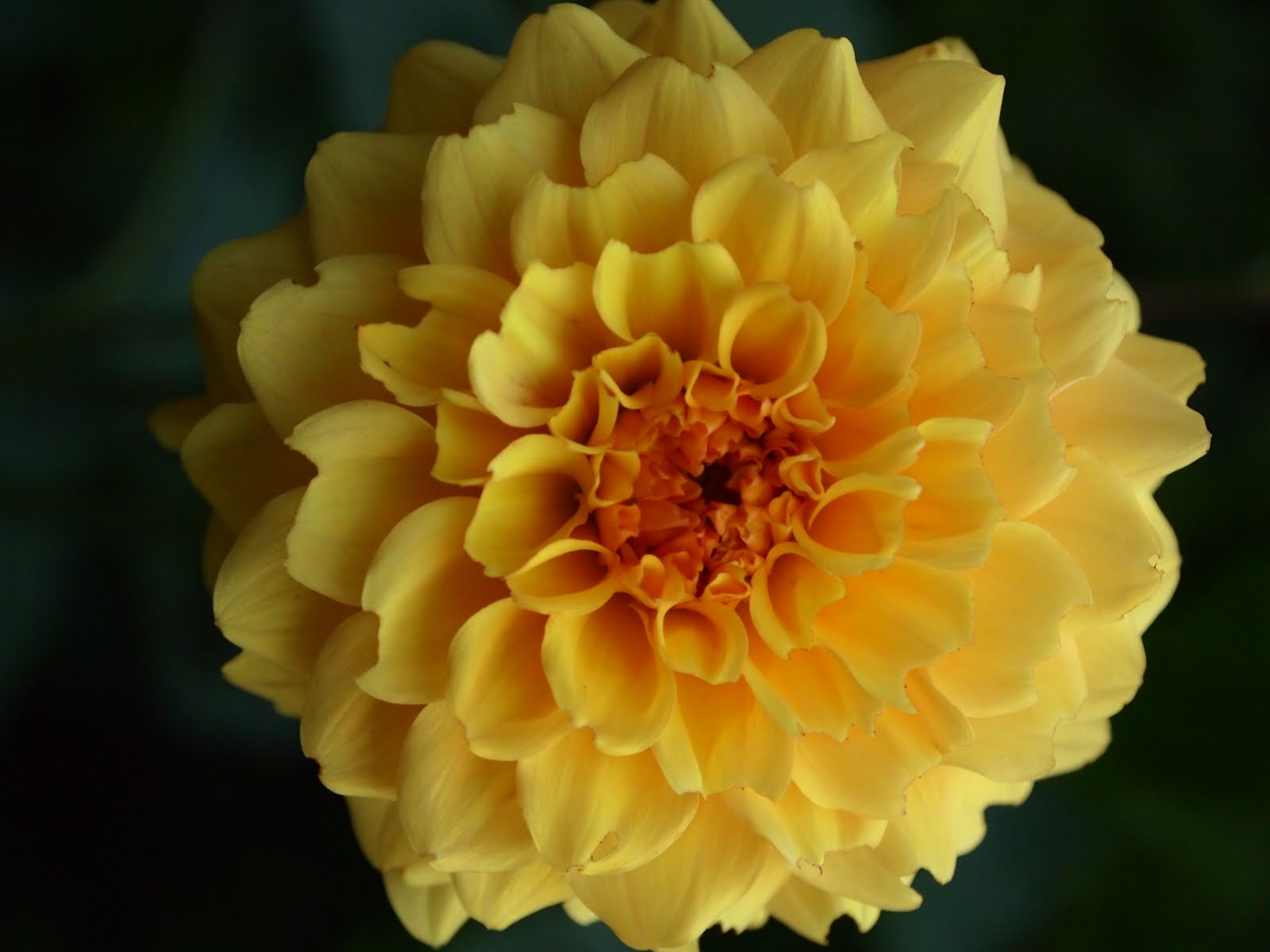
 (Dahlia from the garden. There were all sorts of flowers in bloom, as well as trees in fruit. There was one tree that produced something that looked like a cross between tiny, bluish plums and giant, hard blueberries. I have no idea what it was, but the fruits were all over the ground.)


One evening, I happened to be in the garden just as a flock of jackdaws flew over on their way to their evening roost. I quickly snapped a photo, though without a telephoto lens I knew I had no chance of capturing the birds in any great detail. As it turns out, though, I like the way they look in the distance behind the weather vane; sepia tones are so forgiving:


That's about all there is to say about my time in Rutland/Lincolnshire. I will probably go to Birdfair again next year and, when I do, I am likely to stay in Stamford again--possibly even at the Garden House Hotel, provided they still have those delicious scallops on their menu. If I do find myself in the area again, I hope to leave some extra time for sightseeing and photographing around Stamford, since I know that I only just began to sample all the charms it has to offer.

Monday, 29 August 2011

My Falmouth-to-Heathrow train berth

When I visited the States recently, I had yet again another mid-morning flight from Heathrow that necessitated yet another overnight train ride from Falmouth. This time around I decided I was fed up with getting terrible sleep in the upright, airplane-style seating of the regular passenger cars, so I booked myself a berth. I vaguely recall having a berth for the overnight France-to-Spain trip that I took while traveling abroad in high school, but my memories of that are so dim that this recent trip might as well have been my first.

I was expecting pretty primitive conditions, so actually I was pleasantly surprised. When I boarded the train, the porter (for lack of a better word) showed me to my berth and explained how all the light switches and door locks worked. He also took my order for a breakfast that I hadn't even been aware I would get--in addition to a hot drink, they can bring you things like muffins or croissants or biscuits, all free of charge. Once he'd left, I finally had a chance to look around.

The most important part, of course, was the bed. It was actually pretty comfortable, though the pillows were a bit flat. Regardless, it was horizontal, which is the important thing--I wouldn't have to attempt vertical sleeping until I got on the plane the next day. As you can see, I also had a full-length mirror on the back of the door so that I could primp the next day before departing.

Behind the door were two hangers and various complicated-looking strappy things that, I assume, were for tying hanging luggage and suitcases against the wall so they wouldn't move around too much during the night. To the left of the door handle, on the wall, there was a multi-button control panel with lights for the various parts of the room and an alarm button in case I needed assistance from the porter.

At the far end of the room was a window, although I kept the shade down so that I could have total darkness when I slept. There was also a counter top that you could use to set your things on, or...

...lift up to expose the sink. I had no idea I'd have my own running water in the room, which was pretty handy. It's not potable, so there was a complementary bottle of drinking water waiting for me above the sink. I was even given a towel and a small toiletries bag full of things like a tiny toothbrush and a matching tiny tube of toothpaste, a moist towelette, and some shaving equipment (presumably for male passengers).


To the right above the sink, there was even a television. However, I was more interested in doing a little reading and then going to sleep early. To help me accomplish the first of these goals, there was a small pocket next to my bed, where I could store my reading materials or peruse those provided by the train line:


Of course, despite my most valiant efforts, I was not able to sleep very well. I'm not sure why, because actually the quarters were pretty comfortable. The movements of the train weren't excessive, even though I could feel it go around bends and pull into and out of stations along the way. A little light bled in under the door from the hallway, but no more than enters my own bedroom from the street lights outside. I think the biggest problem was that I was too keyed up for the journey, so I just couldn't relax. I wish I'd anticipated that before I spent an extra 100 pounds on a bed I didn't make proper use of.

Still, it was much more comfortable spending the journey lying down instead of sitting in the awkward seats in the other car, and it was great to have a full-sized sink in which to wash up in the morning. Not to mention, I had privacy and quiet during the length of the trip--two things that are hard to put a price tag on, as far as I'm concerned. All in all, I don't regret the upgrade even if I didn't get any extra sleep. I'll probably treat myself to a similar present next time I'm stuck with an overnight train journey.

Sunday, 28 August 2011

Hodgepodge


Lately I've been traveling--too much. I've hit a wall and I've hit it hard. My only consolation is looking back at the trips I've taken and reviewing all the strange and wonderful things I've seen over the past month.


For instance, I observed this violinist performing in the JFK airport near the smoothie stand. I don't know if he was hard up for money, had lost a bet, or was just bored, but I do know that he was quite talented. This video doesn't quite do him justice, judging by how good he sounded on the previous song.


Speaking of JFK, they have iPad stations throughout the terminal so that you have something to do while you're waiting for your flight. Not only can you surf the Internet, read the news and weather, and check your e-mail, but there are also plugs on the side so you can recharge your own electronic devices. JFK may have had some crummy restaurant choices, but kudos to them for knowing what's really important these days.

---
While I was at the Animal Behavior Conference in Indiana, I often ate my lunch outside on a bench. This little guy came up to me for a handout, which I did not give. Disheartened by my lack of charity, and frightened off by a passing pedestrian, he retreated to the nearest tree, where he proceeded to drape himself across a branch and watch me eat. It was very strange to receive so much consistent attention from a squirrel. Even when I walked to within a couple feet of the tree in order to take this photo, he never moved a whisker. Weird.

I also got a lot of attention from this sheep (in the foreground) at the Egleton Nature Preserve at Rutland Water. When animals regard you with this much intensity, over an extended period of time, you can't help but feel a little paranoid--like they know something you don't.

The sheep was watching me take photographs of another inhabitant of the preserve--ladybugs. Or, as they are called in the UK, ladybird beetles. Evidently there was some sort of ladybird festival going on at the same time as the Birdfair, because there were an awful lot of ladybugs around, crawling on plants, flying through the air, landing on visitors.


---
When I was with my family in Ohio, we went to Cameron Mitchell's restaurant, M, to celebrate my mom's (second) retirement. One of the specialty cocktails on the menu was that most classic of British drinks, a Pimm's. So, in a move that was completely out of character for me, I ordered one...

But the presentation of my drink was nothing compared to that of my mother's. In this case, the monogram could stand for both the name of the restaurant and the name of the drink--a martini:


---
My parents and I also went to North Carolina to visit some relatives there. We had a lovely weekend at the beach, on the drive home from which we stopped at a rest area in West Virginia. There was a shop full of local handcrafted items, including this crochet opossum:

Because I couldn't justify purchasing it for myself, I decided that I would allow myself a photograph as a consolation prize.

Outside the rest area was another interesting find:

Only the most talented of graffiti artists take letters away rather than adding them--and the poetry of this sentiment demonstrates that this was truly made by a master.

---
During the train trips associated with my recent visit to Birdfair, I saw a number of noteworthy things that I could write about here. Because I only had limited opportunities to whip out my camera, I'll restrain myself to two observations.

Here's the emergency sign that was posted over my seat. I'm disturbed by the picture of the saw. All I can say is, I hope that's part of the emergency equipment, rather than the first aid kit.

Second, there were multiple times that I saw people--on the train, at the platform--dressed entirely in pajamas. Although it's not uncommon to see American college students in public in pajamas or pajama-like clothes, this is Britain. People are very proper. And yet:

Nightgown, silk robe, slippers. At noon. ?

I also encountered two different sets of people communicating using sign language--one on the outward journey, the other on the trip home. In my entire life, I think the only time I've seen someone use sign language is when one of my hearing impaired college classmates had an interpreter assist him during our bio courses. Yet here, in the space of just a few days, I encountered three signers (and another hearing impaired person who I suspect also knew sign language) during my trip to Rutland. What a strange coincidence.


---
These are just a few of the interesting and unusual observations I've made over the past few weeks. Interesting and unusual to me, that is--but I can't say too much about the state of my mind these days, as I've practically become brain dead from too much time spent trekking around, hauling heavy suitcases, switching time zones, and getting terrible sleep on flat hotel pillows. Home may have comparatively fewer bizarre sights to see, but at least it's a haven where I can get some rest and relaxation--at last.

Monday, 22 August 2011

The Athens Angel


Lest anyone interpret my last couple of posts to mean that all I did in the US earlier this month was hang out with my dad, let me set the record straight: I did also go out and about with my mother, and occasionally the trips didn't even involve shopping.

One thing we did was visit the "Weeping Angel" of Athens' West Street Cemetery. During my photography days back in high school, I took some portraits of the angel that turned out fairly well, especially once I applied sepia tone in order to make them look antique. However, although I liked the angle of the shots, the pictures weren't quite as crisp and focused as I would have liked. Since acquiring my new cameras, I have been looking forward to returning to the cemetery for another go. My mom came along on the photo expedition in order to try out her new photography equipment, as well.


One thing that's a bit frustrating is that the area around the angel is not necessarily conducive to getting a nice clear, contrasting picture of her entire body; her light right-hand side fades into the sky, while her dark left wing tips fade into the tree. Of course, neither of those compares to the difficulties of trying to shoot from the angel's right side, which requires that you position yourself facing a house inhabited by college students and decorated, for some strange reason, by an old pop machine sitting in the yard. It doesn't exactly help create the gravitas that you'd normally associate with such a monument. In the end, though, I was able to acquire a decent shot:


I have a hard time choosing between sepia tone and black-and-white. However, I think that both work better than full color--maybe because they make the subject seem more venerable or solemn, somehow. In general, I also like the side shots more than those snapped from the front, but I did get one of the latter that made me rethink that opinion:

This image also allows you to see the entire statue, including the base upon which is inscribed the purpose of the display--which, as you can see, is to memorialize the unknown dead. My mom theorized that the angel is writing in a book because she is taking notes to document those who have fallen--because, after all, even if we humans don't know who they are, an angel surely would. I think it's surprisingly easy to overlook the fact that the angel writing in a book at all, though certain angles do emphasize this more than others:

After I got home and had the chance to look through my photographs, I was feeling pretty happy with the images that I acquired. Then my mom turned her computer around and showed me some of the pictures that she took:


I was so caught up taking head-to-foot images that it never even occurred to me to get some close-up shots. As a result, I didn't do nearly as good a job capturing the features that gave the angel her nickname. Also, how cool is it that the the second two photos kind of line up as though they were deliberately taken as a pair? The final shot is my favorite, not only of my mom's, but of all the images here. I was so jealous of it that I nearly went back to take one like it myself, but then I realized how redundant and silly that would be. It just goes to show that, no matter how old and experienced you may think you are, you can still be schooled by your mother.

---
Click here to read more about the Weeping Angel and other supernatural oddities in Athens, Ohio.

Saturday, 13 August 2011

Flashback: The Ohio State Fair


Staying on the "dad" theme I began yesterday, today it's finally time to post about my recent trip to the Ohio State Fair with my father.

When my dad was young, his parents took him to the Ohio State Fair, so it was only natural that he should want to sustain that tradition once he had his own child. When I was little, both of my parents used to come along for the outing, but my mom has never been a big fan of the fair--particularly since it is, as she correctly points out, fairly repetitive from year to year. However, piglets in the pig barn are always cute, and the smell of hay in the cow barn is always pleasantly sweet, so I don't mind a little repetition. Thus, the trip became a father-daughter thing. I think the last time I went to the fair with my dad was maybe sometime in high school; after that, I was rarely in Ohio for the summer, or, if I was, it wasn't for very long.

Earlier this summer, I found out about the Royal Cornwall Show (RCS), which turns out to be a Cornish version of a state fair (though why a "fair" has camel polo--yes, you read that correctly--I just can't say). Hearing about the farm animals and plant exhibitions at the RCS started me reminiscing about the good old Ohio State Fair--the elaborate animal face paint, the glitter from which always wound up in my eyes; the cotton candy; the Ferris wheel; those darling piglets. I wasted no time in telling my dad it was time to revisit our old haunt.

Fortunately for both of us, my dad is a member of the media. He scored press passes for both of us, meaning not only that we got to park right next to the entrance gate, but we also got in for free. As his official sidekick and photographer, I was to keep my eyes open for potential stories. Of course, a place like the Ohio State Fair is just crawling with stories, but not all of them are suitable for coverage on a local radio station. As I commented to my father, there are few places where you see such a varied mixture of people. You've got people from urban and rural areas, all colors, all socioeconomic backgrounds, adult and child, male and female. It's weird enough to contemplate the fact that you're walking through a barn full of farm animals right in the middle of the city of Columbus, but then you also inevitably encounter some urbanite who's seeing a cow or a sheep for the first time--ever. It's an endless stream of contrast.

We started off by going--where else--to the pig barn. The magic of the pig barn is that it contains a little side room where they sell souvenirs. Inside that room is a pen containing a giant sow and her piglets, all of which apparently sleep for at least 75% of the day. Kids are allowed to reach in and pet those animals that are within an arm's reach, and of course you know I was all over that as a child. When I was in elementary school, my dad took my best friend and me to the fair, and both of us stocked up on pig paraphernalia after petting the piglets in the souvenir room. To this day, I think I still have the pig pen I bought, as well as one last remaining sheet of pig stationery.

As demonstrated by the success of the Babe films, the cuteness of a piglet can melt anybody's heart:


On the other hand, the outrageous size of a prize-winning boar--and all of his, um, bits and pieces--is pretty much always terrifying:


It was also very disturbing to see pigs being herded from place to place. There are many reasons why I should never try to raise livestock, one of them being the fact that I could never bear to willingly hurt or scare an animal. Domestic pigs are apparently not the most intelligent of creatures, and to get them to move from Point A to Point B, their owners used a combination of whipping, calling, clapping, and using a piece of fencing to create a mobile corral. It doesn't take a very perceptive observer to realize that the major effect of all these activities is to scare the bejesus out of the poor animals, which can't be conducive to getting to Point B in the most efficient manner possible. No wonder people like Temple Grandin are having such a huge, positive impact on farm animals and the techniques used to work with them--when you look at these practices from the point of view of an animal behaviorist, you realize there just has to be a better way to get things done.


Next up was the cow barn. Despite the fact that I come from Ohio, I know precious little about cows. I don't even think I could tell the difference between a dairy cow and the kind you raise for meat, though at the fair I did finally discover why dairy cows always look so bony: Because the ladies are putting so much energy into making milk, it keeps their physiques more "svelte" (to quote the euphemism used by the poster that taught me this lesson).

What I have never understood about the cow barn is that it is filled with the delightful, sweet scent of hay, whereas a cow farm (not to mention all its surroundings) smells like nothing but cow poo. How do they manage to keep a closed-in space full of bovines smelling so nice? It is one of the great Fair mysteries.

For the first time, I noticed how the barn was full of people who looked really, really bored. Apparently, taking your animals to the Fair involves a lot of waiting. Waiting for the cow to poo so you can shovel it up. Waiting for the cow to get hungry so you can feed it. Waiting until it's time to walk your cow around the show ring. People were lounging around in various phases of nap: nodding off, dozing, outright sleeping.


Next door was the famous butter cow, which I don't remember from my childhood Fair visits, but which my parents inform me is a mainstay of the event. However you feel about cows and butter, you have to admit that a cow made entirely out of butter is a pretty impressive achievement. I wonder what they do with it when the fair is over? (Ship it to down to Paula Deen?!)


One thing I definitely do remember from my youth is the participation area where kids can learn how to milk a cow. Once you successfully coax a few streams of milk into the bucket below, you are given a pin or sticker to wear so that you can proudly tell everyone, "I milked a cow at the Ohio State Fair!" Most children need a few attempts before they find success, so the organizers must find the most patient cow in the barn to tolerate all the fumbling.


Another of my fond memories is the sheep barn, where, once upon a time, I found this remarkable toy on sale that rolled itself up as you petted it. It was nothing more than a little strip of sheep pelt (wool still attached) that curled in the direction of your movement as you stroked your hand across it. Thinking back on this now, I have to admit that it is a) a very strange thing, and b) something that would probably become boring very quickly. But I was dead set on having one, and bitterly disappointed after my parents denied me the opportunity. Thanks to the benefit of hindsight, I suppose I can now find it in my heart to forgive their logical decision on this matter.

This year, my only sheep souvenir was sheep photography. At one point, I was so immersed in photographing sheepherding in action that I didn't realize my presence was scaring the animals and preventing the shepherds from finishing their jobs. I was very chagrined to discover what a nuisance I was being, especially since I'm sure the shepherds were grumbling under their breaths about the stupid "city girl," which I most assuredly am not. Oh well. At least I discovered that I have a knack for close-up photography of animals in pens (it's a niche market).


Once we'd had our fill of livestock, it was time to go have our fill of the world's unhealthiest food. There are many fair foods that rank among my favorite guilty pleasures, but I availed myself only of the number one: a corndog with ketchup, accompanied by a giant lemonade. I was tempted by the cotton candy, but I decided to hold off on the sweets at lunch and indulge instead in a cup of ice cream for the ride home. For his lunch, my father ordered what must have been the world's largest onion rings:


We sat down to eat right under the "flight" path of the skyride, kind of a small-scale, horizontal version of a ski lift. The skyride was a mandatory part of the Fair experience when I was a kid, as was the Ferris wheel. Both were enticing because they were rides that didn't make me ill, but still had enough of a feeling of danger to make them exciting. Plus, they both give you a great view of the Fair. When I was younger, I always thought the skyride seemed excessively (but enjoyably) high, and I couldn't help but spend the whole ride thinking about how I would suffer horrible injury or death if the chair fell off or the line broke. I also pondered the likelihood that I might slide underneath the safety bar. Yes, I really was that morbid. As an adult, I could clearly see that the skyride was no more than 2 stories high--not a fun distance to fall, but certainly one that is survivable with manageable, or even negligible, injuries. Amazing what a difference perspective makes.


Once we'd eaten, my dad was ready to go back to the cow barn and conduct some interviews--we had to earn those media passes, after all. Since I'd already completed my photography in that area, I took the opportunity to wander through the vending barns, peruse the antiques booths, and visit the poultry and rabbit barn. On the way there, I passed the "ride" of which I have the fondest childhood memories:

My best friend and I rode this together and thought it was absolutely fantastic. It was yet another activity that was fun because it was slightly frightening--a theme that applies, I suppose, to the majority of theme park rides. Our other favorite was, as I already mentioned, the Ferris wheel:

I still remember the panicky feeling I'd get as my car crested and started descending; I'd get a little rush of adrenaline and feel my stomach seemingly rise up into my throat. I also really loved the centrifugal swings--swings that rose up into a position almost parallel with the ground as they were swung around in a circle by a spinning center post. Given the slant of my thoughts in relation to the skyride, you can only imagine what scenarios I contemplated as I spun around on that ride--and yet I loved it! What can I say, I was a weird child.

One of the reasons I wanted to visit the vending area was that, as a little girl, I had once run across someone selling little lapel pins there. I bought a small yellow rose that started off years of collecting pins during trips and attaching them to various canvas bags in enormous, brightly-colored collections. I always loved that pin and was incredibly disappointed when I discovered one day that I'd lost it after its back fell off. I've always been on the lookout for a replacement and was hoping against hope that I might find one in the same place where I'd located the original. Alas, that was not to be, though I did find a beautiful antique bird pin for only $4, which was a pretty good steal.

I also ran across a guy dressed as Waldo from Where's Waldo? I didn't have the time to grab my camera and snap a photo, much to my disappointment, but shortly thereafter I did have the chance to document his female counterpart, Wilma. I have no idea if they were together, or why they were dressed as children's book characters, but who am I to question these things? Just another Fair mystery.


Next door was the very strange rabbit-poultry combo barn--a setup that I suspect has more to do with the fact that all the animals are in small cages, as opposed to any other theoretical similarity between them. Earlier in the day, in the livestock barns, I couldn't help but think about the bizarre genetic impacts we've had on farm animals, and my thoughts tended in that direction again here. It's amazing that from a single species of wild fowl, we've managed to breed chickens that are white, black, orange, grey, and combinations of all these colors and more. Some have spots on their feathers, some have stripes, some barely have any feathers at all, and others have feathers all down their legs and on their feet. Some are tiny, some are enormous, some have gigantic, poofy tails. All of this because of selective breeding controlled by us humans. Pretty impressive.

A particularly striking example of human breeding prowess was provided by a display where a "heritage" and a commercial turkey were placed side-by-side:

We may know how to make birds that give us more, tenderer, and juicier meat, but we obviously dropped the ball on aesthetics in this case.

A third mystery of the Fair is how anybody could find "Ohio Poultry Theatre" (note the British spelling!) very enticing. I found a half dozen people watching the featured movie, including two young girls who seemed very engrossed. I hope the FFA was taking names!


Personally, I was attracted more by the incubator full of baby birds. While I was figuring out a method of taking photographs through the mesh, a girl came up and asked the incubator's tender whether the birds were "real." I have no idea why she thought they wouldn't be, since they were moving around and eating and making little "peep" sounds, but I suppose she was probably a city-dweller who hadn't had much exposure to live poultry anywhere else.


Next up, I wandered through the rabbit portion of the building, even though I've never been all that interested in bunnies. I've never quite understood the draw of them, since many are fairly timid around humans, and all they do is just sit in a cage all day, napping, pooing, eating, and...well, you know--they are bunnies, after all. I pet-sat for one once, and the only time I could get it to give me the time of day was when I rattled its jar of yogurt-covered veggie treats (yum!) and passed it a snack through the bars of its cage. Pretty boring, as far as pets go. However, I admit that there are few animals as soft and cuddly as rabbits, and they can really ratchet up the cute factor:


This was true even of what has to be the largest rabbit ever in the history of the Fair. It was the size of our Scottish terrier and was so fat it actually had 2 chins. I am still not sure how to interpret the look on its face. I can't help but think that it's wondering why someone is forcing it to endure 100-degree heat while it's wearing a fur coat.


Once my dad and I rendezvoused, we headed over to the Ohio Department of Natural Resources (ODNR) section, which has always been one of my favorites. They have an enmeshed enclosure where you can walk amongst butterflies and see them up close:


This year, they also had a small walk-in aviary populated by birds that had been rehabbed but could not be released into the wild. Some of them had clearly been injured, but I suspect that others had been brought in as chicks by people who didn't know that, 99% of the time, it's better to just leave a baby bird wherever you find it. Once it's been raised by humans, it's probably not going to be successful on its own, so it is likely to be a captive all its life. The small birds in the aviary (including a lovely male bluebird) seemed pretty happy, but the three wading birds seemed downright miserable, and I'm pretty sure that the gull didn't have too much time left in this life. It was a bit depressing. However, I was happy to see several box turtles. I haven't seen one in years, and the last time I saw one in Ohio was probably over a decade ago.


The ODNR area also contained several other types of captive animals (foxes, skunks, birds of prey, a beaver, etc.)--also individuals that were unable to survive on their own in the wild after completing rehabilitation for injuries. Even though I like the concept of giving these animals a chance to live a bit longer, their body language made me wonder if it was really the best thing for them. Almost all of them were in the far back corner of their cages, curled up in little balls, warily eyeing their visitors. Den-building animals were not even given the materials to make themselves a cozy little cave, but instead were forced to lie out in the open--all the better for the human viewing experience. All I can say is, I hope these animals get to stay in more comfortable quarters when they aren't at the Fair, and I hope the people who saw them in their cages got something out of the experience.

On the way out of the ODNR exhibit, I snagged some postcards in their gift shop--one for my husband and two for me. Mine featured recipes for two forms of buckeye candy--the traditional one that is shaped like the actual nut, and the type shaped like bars. I don't eat chocolate much anymore, but I do still have a real weakness for the heavenly chocolate-and-peanut butter combination of my state's mascot candy. I think it's time to introduce those delightful concoctions to the UK.

By the time we were done viewing the natural wonders of our state, my dad and I were about ready to head home. However, we decided to do one last thing: ride the tractor train.


This is a form of free transportation available to anyone at the fair. It does a circuit through the whole venue, and so is a nice way to take in the scenery and see the "big picture." Unfortunately, shortly after we got on, we were held up by a slow-moving marching band ahead of us. Rather than sit and broil under the sun, we hopped off and made our way back to our car, passing some "hay art" along the way:

You can't tell me they've got anything like this at the Royal Cornwall Exhibition!

---
To see more pictures of the event, go to my Kodak album.
To hear my Dad's coverage of the Fair, and to see my first professional photo, go here.