Monday, 12 March 2012

Atmosphere

Shortly after I first moved to the UK, my husband and I took a road trip during which we encountered fog in the middle of a day that had been blessed with otherwise pleasant weather. I had no idea that fog could happen in the middle of the day, which shows how naive I was about British weather. Now I know better, but that doesn't mean I don't find days like today weird. We had fog all day, sunrise to sunset, and at no point could I see any more than about an eighth of a mile from my front windows; much of the time my view was limited to about half that. Here is the photographic proof:


Fog over Events Square and adjoining marina. The camera was able to detect features--like the boats' masts--that I couldn't see through the fog.


Here's the less "warm" version of that same view, after a few more minutes of sunset.


The Events Square parking lot and park, to the left of our balcony. This is the longest view I got all day--probably about 200 m.

Saturday, 10 March 2012

Switzerland 2012: Lausanne

Until this week, I knew next to nothing about Switzerland, except that it's a place with well-made utility knives, chocolate, cuckoo clocks, chalets, and secret bank accounts. Also, I knew it was neutral in world affairs, and supplies the Vatican's guards. In other words, I had a very limited and stereotyped view of the country, derived almost exclusively from how it is portrayed in films. After having visited Switzerland for a grand total of about 48 hours, I can't say that I am much more educated about the country, but at least I have seen some of it, and spoken a little of one of its languages, and eaten a whole lot of its cheese. Not a bad start.

Avon Gorge Hotel, Bristol, UK
The road to Switzerland led first through Bristol, where my husband and I spent the night in the Avon Gorge Hotel, just a couple blocks away from a place where my husband lived while doing his PhD at Bristol University. It was a grand-looking old hotel that had the sort of circuitous and inexplicable hallways I've only ever seen in British establishments. To get to our room on the second floor, we went up a flight of steps, down a hall, down 2 steps, down a hall, down another half dozen steps, and down another hall. You'd think that we'd have worked our way back down to the front desk by then, but in fact we had arrived at our door. Because we checked in after sunset, we couldn't enjoy our balcony or its view until the next day:

Our balcony

The iconic Clifton Suspension Bridge, which requires a 50p toll. Unfortunately, the tollbooth is not manned, and does not accept 5p or 1 pound coins. Guess who didn't have exact change and held up traffic until a good Samaritan saved the day by donating spare coins?

Our room had many interesting features besides just the balcony. The decor was very tropical-British-colonial, and our bathroom had this handy little bottle opener next to the toilet, which is good because I always like to take my drinks into bathrooms and expose them to all the toilet germs:


Recently I've been reading a few blogs about vintage styles, so I couldn't help but notice the incredible retro faucets at the sink. These are some serious hunks of rock:


Our trip to the airport and flight to Switzerland were both pretty uneventful. I didn't have a window seat so, unfortunately, I didn't have a chance to see either Geneva or the Alps from the air. However, the mountains make their presence known pretty much everywhere, so I was able to get plenty of good views later on. Official entry into Switzerland involved a rather unusual immigration process. The officers gave most passports only a cursory look and waved the bulk of passengers through very quickly. My American passport garnered a bit more attention, and unlike my British flight-mates I got a visa stamp upon entry and departure. I am not sure why I was treated differently, but I'm not going to complain about anything that fills my passport pages--I ordered an extra-large passport specifically for that purpose.

The airport is next to the train station, which is where we needed to go in order to get transportation to Lausanne. We purchased our tickets using automated machines that only gave instructions in French; it is moments like that when I am grateful to have studied that language for 8 years. I was amused to see that children and pets counted as 1/2 and 1/4 people, respectively, while adults counted as 1 person apiece. One thing I immediately noticed was that the train station was exceptionally clean; also, true to the exacting standards of the Swiss, our train departed right on time. 

One of my main enjoyments when traveling somewhere new is seeing the countryside; I suppose it is the biologist in me comparing ecosystems. Unfortunately, I couldn't snap any good photos of Lake Geneva because trees kept getting in the way of my view. That was not, however, an issue with the mountains:


Even the unattractive towers in this picture can't ruin the spectacle of the snow-covered peaks in the distance. Although this particular field is empty, most of the agricultural areas we passed were devoted to grapevines; this region of Switzerland is renowned for its wines. There were vineyards of all shapes and sizes, from tiny plots in someone's backyard up to massive, industrial-scale growth, and they were crammed into seemingly every spare inch of space. Here's a blurry one, as seen from the train window:


Once we arrived in Lausanne, which is only about 45 minutes away from Geneva, we opted to walk to our hotel rather than hail a taxi. According to the various Internet maps we consulted, the walk should only take about 15 minutes and cover a distance of about 1 mile. One thing that Google doesn't accurately convey is vertical distance as well as horizontal distance; it turned out that we were trudging up steep inclines and climbing steps left and right. This wouldn't have been so bad except that I was wheeling my suitcase along behind me and it was making a terrible racket because much of the ground was cobbled rather than paved. With a little help from the iPhone's GPS capabilities, we eventually found our way to Hotel Crystal, which sounds fancier than it was. However, it was conveniently located in the heart of the shopping district and offered a lovely view of Lausanne's Notre Dame Cathedral:

Lausanne's Notre Dame Cathedral, which was built in the late 12th and early 13th centuries in the Gothic style. It is apparently considered to be the finest Gothic structure in Switzerland, and one of the top ten examples of Gothic architecture in Europe.)

We were also positioned diagonally from a bell tower whose bells chimed out every hour, but paid particular homage to the hours of 9 AM, 12 PM, and 6 PM, ringing for minutes on end. Sadly, my attempt to record video of this seems to have ended in failure, as I cannot find the movie anywhere on my camera. Suffice it to say, the acoustic display was incredibly loud. Here is where all the noise was coming from:

(You can just barely see the bells above the cupola on the left)

Farther down from the tower, both vertically and horizontally, was the bustling shopping and restaurant district. We had two particularly fine establishments within seconds of our hotel's front door: Starbucks and McDonald's--wherever in the world you go, there they are!


The whole reason we were in town was so that my husband could give a lecture at the University of Lausanne. His host, a researcher at university, escorted us to Les Brasseurs, where we could have both drinks and dinner. Simply because he could, my husband ordered a liter of beer--or, in British terms, 2 pints. It's an amount that many people would drink in one sitting, but it looks ridiculous combined into a single serving rather than brought in two separate glasses:

Florian de Fal steals a sip from the half-empty liter of beer

For dinner, I opted for the Swiss version of pizza, which is called flammenkueches, or "flamed cake." Basically, it is a thin dough covered with toppings such as cheese, meat, more cheese, vegetables, and even more cheese. Honestly, I've never seen so much cheese in my life. As soon as we walked into the restaurant, it was all I could smell--and believe me, it was a powerful scent. The pull of fromage was so strong that I ordered La Trois Fromages, which came with goat cheese, herby cheese, and reblochon. It was delicious, as was my husband's rosti montagnard, which came with raclette (another Swiss cheese), ham, and an egg on top. Thinking I would finish the night off with a nice light dessert, I ordered pommes cannelle et glace vanille, or cinnamon apples with vanilla ice cream. Little did I know that this also involved dough; it was kind of like an apple pizza, with thinly sliced apples layered over dough and then topped with the ice cream. I guess I should have anticipated this development, because pastries are such a prominent part of the cuisine in this area of the world.

After dinner we headed up to an Asian-themed bar (in terms of decor, at least) called Karma, where I had a cute little pot of jasmine tea that I managed to pour all over the table while trying to serve myself. My husband and I peppered his host with questions about Swiss culture--in particular, its government and political policies. I can safely say that I now know more about these topics than I ever anticipated; my only worry is that I will mix up these facts with the ones I am currently learning for my "Life in the UK" settlement test (but that is a whole other blog entry). I learned that the original Latin name for Switzerland is Helvetica, and that the reason we have a Helvetica font is that its designer was Swiss. The Swiss motto is the Latin phrase meaning "One for all, all for one." Who knew the original Musketeers were from Switzerland?! Also, I found out about a whole new language that I didn't even know existed: Romansh, which emerged from the "Vulgar Latin" spoken by Roman conquerors of the country.

The next morning my husband and I enjoyed the continental (literally!) breakfast at our hotel before he went to campus to give his talk. The breakfast was, as you might predict, about halfway between what you'd find in France and what you'd eat in Germany. It had the delicatessen-like array of cheese and cold sausages that we'd previously encountered in Bielefeld, plus all the croissants, baguettes, and other freshly baked breads that you always find in France. Luckily, there were also "normal" things like yogurt and cereal, plus a juice machine that made fresh orange juice on the spot.

Once my husband departed, I set off to wander around the city and see what I could see. I passed through the weekly Wednesday market at the Place de la Riponne and, yet again, smelled the very strong scent of cheese wafting through the air. I went up to the cathedral and admired the intricacy of its carved front door:


I was a bit disappointed at all of the reconstruction work that's been done, since it is very obvious--you can probably see it in the image above. I don't mind the idea of restoring an old building, but I hate how obvious these restorations are. When I got home and did a little research, I was surprised to find that the work had been done in the late 19th century, since most of these newer stones look like they could have been laid in the past 10 years. I was more impressed by the style of the fire hydrant outside, since it was an unexpected place to find such attention to detail and artistry:


After leaving the cathedral area, I continued to wander around the city and take in the sights and sounds. I passed an amazing street band busking in front of the noisy-bell building near our hotel; they sounded kind of Latin but I am not sure whether they were South American or traditional European. Although they played their instruments well, the impressive bit was their multi-part harmony. I thought I might go back later and see if they were selling any CDs, but by the time I returned to the square, they had vanished. There were plenty over other musicians sprinkled throughout the area, though--including an older man playing a strange device that sat in his lap and had a crank that he repeatedly rotated. I think it may have been a hurdy-gurdy, but I only say this with the benefit of hindsight and Wikipedia; I didn't get a very good look at the time. He was singing songs that were very clearly old folk tunes, and which sounded interesting but incredibly out of place, given the setting.

One of the weirder things I saw during my wanderings was a bus driver holding up traffic at a stoplight while he repeatedly vomited out the window of his vehicle. I can't say I've encountered that during any of my previous travels. Other bizarre sightings include a strange style of lingerie in which the bottoms reach all the way up to the top of the ribcage, just under the bra, and, elsewhere in the same store, cooking salt flavored with the stamens of Swiss alpine flowers.

Unfortunately, that is about the extent of my sightseeing, since I was suffering from a sore back and couldn't comfortably walk around for more than a couple of hours. I did manage to stay on my feet long enough to buy a new pair of boots, which I was hoping I could do in order to take advantage of the nearly 1:1 exchange rate between Swiss francs and US dollars; it was much cheaper than shopping in the UK.

That evening our host took us out to fondue, which apparently is a Swiss specialty. I'd never really thought about that before, but it makes sense--fondue is usually made with some variety of Swiss cheese, and it's exactly the sort of warm, comforting meal that would be dreamed up by people who live in a cold, snowy climate. The only drawback was that the entire meal consisted solely of bread and cheese, and by this time I was fairly certain I was morphing into a human-sized piece of cheesy dough thanks to what I'd been eating for the last day and a half. I asked the waitress if there were any vegetables available, such as mushrooms or broccoli, that I might dip in the cheese; this elicited a look that combined disgust, amusement, and confusion, and ultimately produced no results. Luckily, I was able to order a salad instead. There was so much fondue that even Florian got in on the action:


By the time you are done eating a pot of fondue, a crispy crust of cooked cheese has coated the bottom of the dish. This is considered to be the best part of the meal, but of course can only be eaten by those who have the patience to chisel it free, as well as the room to stuff it in their already well-laden bellies. Our host told us that he normally likes to throw an egg or two in the dish and have a cheesy, eggy delight at the end of the night, but he also admitted that it can be difficult to eat something that rich and heavy at that point in the evening. All I know is, it's a good thing these people live in such a hilly place, otherwise they'd never burn off all the calories and fat they consume each day.

The next day we lounged around in our hotel room until noon, at which point we checked out to the sound of the bells clanging away across the street. We headed back to the train station--a journey that was much more pleasant in reverse thanks to the fact that gravity was assisting in the movement of my suitcase, rather than trying to prevent it. We were a bit worried that our return tickets to the Geneva airport would not be valid since we hadn't specified that we wanted to take the journey on a different day than when we'd set out on our trip, but luckily we didn't have any problems.

Sasha contemplates the Swiss countryside
The rest of the trip went smoothly, unless you count Sasha's pouring hot tea all over his lap during the drive home from the Bristol Airport. Switzerland is an hour ahead of the UK, so although we arrived back home around 9 PM, it felt more like bedtime; I always find traveling so exhausting, plus airplane rides invariably leave me with migraines. The best part of climbing into our bed was returning to normal-sized pillows--the ones we had in our Swiss hotel room were flat little square things that offered absolutely no support.

However, that's really my only complaint about the whole trip; well, that and the fact that I wasn't spry enough to spend more time exploring the city. I'll just consider this reconnaissance for further trips that will be longer and involve a) time spent on a boat on Lake Geneva, and/or b) skiing in the Alps. At least I know that if I start pining for a taste of Switzerland to hold me over until those future visits, I have a nice bar of Lindt chocolate sitting in my cupboard.

Sunday, 22 January 2012

Kenya dig it?

My recent journey to Kenya has helped me learn a very important lesson: In the run-up to a big trip, it is best to avoid stresses associated with taxes, paychecks, and employment. These can leave you so grumpy and tense that it becomes difficult to enjoy yourself.  That was certainly the case with me for the first several days of our safari, during which a black shroud of misery obscured my view of the country. Alternatively, it is also possible that I saw Kenya not through a more negative lens, but a more realistic one, because of my lower level of cheerfulness and optimism relative to last year. Or, maybe it was a combination of the two.

(Pathetic fallacy: angry weather seen from the escarpment leading down into the Great Rift Valley)


After all, Kenya is a country of juxtapositions. It's is a wonderful place full of fabulous wildlife and bright colors and fascinating cultures. On my first visit, these are the qualities that I focused on. It was like going on a first date with a potential partner--I was feeling generous and optimistic and concentrated mainly on the positives. But now that time has passed, I've been forced to acknowledge some of the less favorable traits on display, including serious issues like extreme poverty, social inequality, human-wildlife conflict, and corruption.

Fortunately, I wasn't completely overwhelmed by the bad things--just less able to overlook them than before. One thing that quickly began to improve my attitude was the compilation of my 2012 Kenya Bird list, an activity that began during our visit to the Kenya Wildlife Service (KWS) headquarters shortly after our arrival. Despite the fact that the KWS is located in the middle of Nairobi, its grounds host a variety of species, such as white-browed sparrow weavers, African paradise flycatchers, speckled mousebirds, and variable sunbirds. We also had a good talk from a KWS official who started the conversation about the difficulties of preserving wildlife in a country where many people are so poor that they see poaching as their only option for obtaining materials for fuel, shelter, and sustenance; the obviousness and importance of this tension is one of the main reasons that we take our biodiversity and conservation students to Kenya in the first place.

(Lovebirds in a snag at Lake Naivasha. There are three types of lovebird in the region, and all three could be found in this single tree: Yellow-collared (a pair of which is shown in the center here), Fischer's (hiding out of sight on the other side of the trunk), and a hybrid of the two (at top)).


The drive from Nairobi to Lake Naivasha was strangely similar to the one we had last year, right down to the sprinkles that started falling once we began to descend the escarpment down into the Great Rift Valley. Unbeknownst to me at the time, this meteorological paralleling was a trend that would continue the entire trip, in the form of rain at the Met Station on Mount Kenya and showers in the Masai Mara. For me, the most striking aspect of our car ride was seeing, again, the signs of extreme poverty throughout the Kenyan countryside. These had not escaped my notice last year, but this time around I found them particularly depressing. It is hard to watch an elderly woman walking bent in half, lugging a heavy load of brush on her back; it is equally sad to see elementary school-aged children struggling to carry 5-gallon plastic bottles of water home from the pump, or raising their hands to try to hitchhike somewhere with complete strangers. From both aesthetic and ecological viewpoints, one especially unappealing sight was the endless refuse littered along roadways, piled behind buildings, and dumped in the centers of towns.

(Masai giraffe, seen browsing on greenery at the side of the road)


Thankfully, my doom and gloom attitude started to improve by the time we reached Top Camp at Lake Naivasha. We were greeted with a freshly-cooked meal and finally had the chance to shower and stretch our legs after so many hours in one vehicle or another. Over the next few days, we used Top Camp as a base from which to visit many of the same destinations as last year--Crater Lake, Hell's Gate, and a local chameleon farm, to name a few. The weather leading up to this year's trip was much rainier than it was last year, so there were noticeable differences to the flora and fauna. For one thing, the grasses were much higher and greener, which of course had a big impact on all the species that have to worry about stealthy predatorial cats sneaking up on them. This meant that we saw fewer of some animals and more of others, and that they were distributed differently throughout the habitat. Another noticeable difference was the increased amount of avian breeding behavior. It seemed that everywhere we went, we saw adult birds engaged in nest-building behaviors, chick-rearing activities, or elaborate displays to prove their worthiness to mates. Kenya's incredible species richness and diversity were prominently on display.

(I thought I was taking a picture of three zebras looking in the same direction. They thought they were posing for pornography. I didn't notice the difference in opinion until one of my companions politely pointed it out to me after the fact.)


We also had the opportunity to experience wildlife in a more up-close-and-personal way this year--especially during our stays in a campsite in the middle of Lake Nakuru National Park and a ranger station in the Mara North Conservancy. The first site had a small fence in order to keep out potentially dangerous animals such as buffalo and rhinos, while the second was completely open and required night guards to keep an eye out for our safety. When we first arrived at the Lake Nakuru camp, there was a rhino grazing on grass within 10 m of the fence. At the Conservancy camp site, we spotted fresh elephant poo in the field where we pitched our tents, but the real excitement didn't start until nightfall. We pulled out flashlights in order to look for the eyeshine of nocturnal mammals, and were treated to close (but safe!) encounters with hyenas, white-tailed mongooses, a porcupine, and (probably) a genet. Lots of tiny glowing red eyes near the garbage tip turned out not to be mice, as we'd first suspected, but giant hawkmoths emerging from the trash. One particularly neat find was a pair of turtledoves snuggling together on a roost just above my tent--our second roost spotting of the trip, the first having occurred on Mount Kenya, where we saw a pair of mountain greenbuls avoiding the cold rain by sheltering together in a bush.

 (African fish eagle patrolling its territory at Crater Lake)


This year I was also treated more to the sound of African wildlife. At 3 AM during the last night of our stay at Naro Moru, a pack of hyenas whooped just outside our campsite, setting off a flurry of alarm vocalizing from nearby baboons and monkeys. On the final evening of our visit to the Masai Mara, the distant rumblings of lions permeated our riverside bandas (I'd never have recognized them without the assistance of my roommate Sarah). Other firsts included sightings of lions in trees (supposedly a rare occurrence, but one that we witnessed during three of our four lion encounters), good glimpses of hippos out of water, the feeding of a parasitic cuckoo chick by its adopted (and much smaller) sunbird parents, and some gigantic hares fleeing from our vehicles. For some reason, we also saw a number of copulating livestock (particularly donkeys), but I'd just as soon forget about that.

 (Young Masai warriors in a jumping contest to prove their prowess)


Last year I was sick battling a mysterious stomach illness when the rest of my group went to visit a Masai manyata in order to learn more about its residents' cultural practices. This time I was able to go along, which didn't exactly please me--I was worried it would be more of a theatrical performance than a genuine anthropological learning experience. On the whole, though, it was surprisingly pleasant. For one thing, we walked to the village from our campsite, which gave us a rare opportunity to do some off-road navigation of the African countryside. Another bonus was the chance to freely photograph people, which was virtually impossible throughout the rest of the trip (see below). It was intriguing to see Masai houses, which are made predominantly of cow dung, up close, and see how they are positioned in a circular arrangement in order to form a cow "pen" in the center of the village. Although the Masai were at worst civil, and at best very friendly, I'm convinced they must have mixed feelings about being treated as human curios; I'd love to know how they actually feel about visits from groups such as ours.

(Simultaneous sunrise and moonset at Lake Naivasha)


Although I was invited on the Kenya trip to act as an instructor, I took advantage of the opportunity to act as a student and learn some photographic techniques from another staff member. However, one of my biggest frustrations with the trip is our inability to stop and document/experience some of the most iconically Kenyan sights that we see--women wearing traditional dress (although there were also a surprising number wearing Prom-style dresses in the middle of the day--weird), vendors selling produce by the roadside, children walking to and from school while holding hands or with their arms around each other. Those are the images that I would really love to post here, since they are the sights that give the country its charm, warmth and flavor. Unfortunately, we are largely unable to photograph these things because it is dangerous for us to make unexpected stops in unprotected places--not as dangerous it would be in northern or eastern Kenya, near rebels and pirates, but still dangerous. Where we do stop, we are warned to keep our cameras hidden since it is not uncommon for people to attack photographers and destroy equipment if not given copious recompense for appearing in images.

(White rhinos. Thanks for the rear view, guys!)


Sadly, I think our trip is doomed to be remembered best for its catastrophic ending--a gastrointestinal illness that took out about a quarter of our group on the day we were due to make the long drive from the Mara to Nairobi before flying back to the UK the next afternoon. We're still not entirely sure if it was food poisoning or a virulent stomach bug, but I can personally attest that, whatever it was, it was horrendous. On the morning that it claimed its first victims, I could tell that I would eventually succumb, but luckily I managed to hang in there until we reached the luxury of our Nairobi hotel (with warm running water, flushing toilets with seats, and electricity!). Other people weren't so lucky, and I am not sure how they managed to bravely endure the seemingly endless bus ride to the city. All I know is that it's been 6 days and I am still struggling to eat solid foods. What a delightful souvenir (then again, I got sick last year, too, so this wasn't exactly unexpected).

Overall, despite my initially dark attitude and the dreadful medical emergency at the end of the trip, it all went quite well. We didn't have nearly as many food or transportation issues as last year, and the scheduling allowed us to get more comfortable amounts of sleep. The fantastic wildlife and enthusiastic students eventually won over even this grumpiest of instructors, and I yet again feel fortunate to have been included on the annual excursion.

---
For more photos from the Kenya 2012 trip, visit my Kodak gallery.

Wednesday, 28 December 2011

An anniversary food fest

Today is my husband's and my second wedding anniversary, which we happen to be spending in the same county and state where we got married 730 fateful days ago. We are not doing anything particularly exciting to celebrate this occasion--not because we don't care about it, but because we had a premature recognition of this momentous event a couple weeks ago, when we visited the two-Michelin-starred Nathan Outlaw restaurant at the St. Enodoc Hotel in Rock, Cornwall, UK.

(The St. Enodoc Hotel, Rock, Cornwall, UK)


Although the establishment is, apparently, fairly well known--it has been named as the Best Seafood Restaurant in the UK by The Good Food Guide, for instance--I only found out about it by accident because it was featured in an airline magazine I browsed through during a flight to Scotland last spring. Once I knew that such a snazzy place was only just up the road from Falmouth, I knew that I had to find an excuse to go there. For months and months I waited around, trying to find the perfect occasion for a visit, until finally I realized that our anniversary was a pretty good fit: My husband loves food, I love food, and we love each other, so it seemed a match made in Heaven.

Of course, the thing I didn't quite bargain on was how very unromantic it is to eat a 6-course meal (plus an amuse-bouche and bread), since by the time the final plate is cleared, it takes all of one's energy and concentration to get from the table to the car, and then from the car to the hotel room, prior to collapsing in a stuffed heap on the bed. However, it hardly seems fair to complain about being well-fed, especially since the food we consumed, in this case, was absolutely terrific.

(Chef Nathan Outlaw)


Outlaw's fine-dining restaurant experience revolves around a seafood tasting menu which can either be ordered with or without a matching "wine flight." Having already sampled the exquisite but expensive tasting menu at Jamie Oliver's nearby Fifteen restaurant, I was a bit worried at how much the 2-Michelin-starred Outlaw restaurant would charge for something comparable. However, I was pleasantly surprised to discover that it was "only" 85 pounds per person (with the accompanying wine tasting, which we did not do, costing an additional 75 pounds per person).

Uncharacteristically, and throwing all caution to the wind, I decided to begin the meal with a cocktail--champagne and gin mixed with lemonade, creating some sort of a lemon spritzer. I actually found it quite tasty, despite my normal aversion to the flavor of alcohol. Because I never drink I immediately became very...well...chatty. We were then given an amuse-bouche--or, rather, two: some raw salmon and horseradishy spread on little toasts, plus some deep-fried crab balls. We were then brought a plate of freshly-baked bread and butter. In retrospect, it would have been a very good idea to have skipped the bread, or at least to have eaten it very sparingly. However, we'd both been starving ourselves in anticipation of a giant meal, and by that point (about 7:30 PM), we were ravenous; thus, we each had a couple slices apiece.

(One of the fish dishes served at Nathan Outlaw's restaurant. Unfortunately, not one of our fish dishes--I took my camera along but was too distracted by enjoying the gustatory delights to remember to get any photographic evidence of our experience.)


The next course was a mackerel cocktail, described on the official menu (of which we received autographed copies as souvenirs) as "smoked mussels, oysters, cucumber, and horseradish." The oysters were fried (a tradition in my family, so an unexpected taste of home) and covered with crumbs that had been soaked in squid ink--my first time eating that particular ingredient. The entire cocktail sat in the bowl of a little serving glass whose stem was filled with a homemade coleslaw.

Next up was a thin strip of cod with piccalilli spices, bacon, and 
puréed cauliflower. The skin had been left on the cod and was perfectly crisped; normally I would have been tempted to peel this off but the entire dish was so delicious that I ate every last bite--even the piccalilli spices, which clearly included little bits of pepper (not my favorite of vegetables).

Perhaps my favorite course was the bream, which was served with brown shrimps and squid and was covered by a saffron sauce. This was accompanied by toasted bread served with what I think was a fish (mackerel?) paté specially designed to work well with the saffron. As pretentious as our waitress seemed while explaining that to us, my first bite immediately proved her to be correct--it was an amazing bit of culinary wizardry of which I could have happily eaten another portion.

(Nathan Outlaw in action)


By this point in the meal, my husband and I were both feeling a bit full--not only from the food but also from the entire bottle of sparkling water that we'd already managed to consume before starting on our second (which we also finished; where did we find the room?). I think we were both quite ready to move on to the dessert portion of the evening, but our next serving was the "main course," if such a thing exists in a tasting menu: brill, served with nuts, beetroot, hog's pudding (not a blood product, as I originally feared, but merely a type of sausage), and mushrooms. This dish was also delicious and the fish melted in our mouths, but I was beginning to feel rather nauseous from all the food and was forced to chew very slowly and take lengthy pauses between bites. I had no idea how I could make it through a further two courses.

I think the serving staff must be used to this reaction from their guests, because they did give us a longer break while transitioning from the brill to the first dessert dish--lemon meringue. The meringue--really a frozen yogurt with a sorbet-like consistency--was light and acidic enough to cut through the weightiness of the preceding savory dishes. It wasn't painful to keep shoving additional spoonfuls into my mouth, so I could at least enjoy the flavor (which is on par with cinnamon-apple as the best dessert theme possible, as far as I'm concerned). All the same, I knew without a doubt that I almost literally had no room left for more. My face must have announced this, causing our waitress to chuckle as she collected our empty plates and ask whether we'd be able to handle the last course. I think my response was probably a sickly groan--assuming I could manage even that.

(More delicious fare at Outlaw's restaurant: smoked sea bass, St. Enodoc asparagus, and English mustard. The menu varies seasonally, and this was a dish produced at the restaurant earlier this year.)


The final course, an almond sponge comprising honeycomb, rice pudding, and pear and ginger sorbet, was probably fantastic. It looked lovely, it smelled lovely, and the tiny spoonful that I tried was pleasant. However, I was just not able to eat anything else. My husband suffered through some of his portion, but even he had to give up--and, given that he normally eats about twice as much as I do, that just goes to show how much food we had managed to consume during our three-hour visit to the restaurant. Our waiter attempted to interest us in some after-dinner drinks, but all I wanted at that point was to put on the baggiest clothes I could find--or perhaps just wrap a sheet around my body--and sleep until the new year or whenever my digestive tract had managed to process everything I had just presented to it. First, though, we had to pay the bill, which was, without a doubt, the largest sum I have ever paid for a meal for two people. I'm not entirely certain that ANY meal is worth that much money, but all the same it was definitely one of the most enjoyable collections of food I've ever consumed (enjoyable until the point when I was about to explode, that is).

Of course, part of what you are paying for is not just the food itself, but also the fame and experience of the chef, the notoriety of the "brand," and the fanciness of the setting. The St. Enodoc Hotel is quite an upscale place, judging not just from the décor but also the prices; even in the off-season, rooms rented out for several hundred pounds apiece. Throughout our meal, we had several different serving people, all of whom were very knowledgeable and eager to please. At one point, my husband and I overheard the sommelier giving his spiel to the guests at the next table over; I'm sure he was giving his clients every penny's worth of the extra 75 pounds per person required to experience the wine tasting, but boy did he sound fake, pretentious, and condescending. Actually, as nice as our servers all were, I felt that most of them were a bit condescending--perhaps because my husband and I were younger than the other clientele, or, though dressed quite nicely, clearly not as upper-class as some of the others? Who knows; maybe we were imagining things. There was one waitress, a German who had some difficulty with her English, who was very genuine and friendly and clearly tried to make our evening as delightful as possible--for instance, she seated us at the table nearest the kitchen so that we might catch a glimpse of Nathan Outlaw through the decorative window (which we did!).

(The Tzitzikama Lodge, where we spent the night after our anniversary food fest)


The only real drawback of the evening was that we chose to spend the night in Rock rather than driving back to Falmouth. We'd expected a longer commute, and we also anticipated being more tired once we'd finished gorging. Being unable to afford accommodations at the St. Enodoc Hotel (especially after paying for dinner!), we booked a room at another nearby bed and breakfast. Although the building and the room looked quite nice online and in person, we both ended up sleeping terribly because of problems with the bed and with the ambient temperature. On top of this, they only served breakfast until 9 AM, so on a Sunday morning after a long and incredibly hard week of long, stressful work days, we had to set an alarm to get out of bed in time for our morning meal. That is most certainly not my idea of a good weekend, nor of a good getaway.

All in all, though, the hotel experience wasn't negative enough to mar what was otherwise a pleasant celebration of our 2 years of married bliss. We also weren't deterred by the pre-dinner detour, down a random and dead-ending country lane, on which we were guided by our confused GPS system. Next year is our "leather anniversary," according to the guide I just found on Google. If a giant gourmet feast is an appropriate substitute for fabric on our "cotton anniversary," I'm not quite sure what I'll need to cook up to swap for next year's animal hide theme...suggestions welcome!

---
Thanks to the following websites for providing the images used in this post: 


http://www.thetoptensite.com/cornwall-hotel-st-enodoc-hotel-padstow-cornwall.html
http://www.caterersearch.com/blogs/guide-girl/2009/11/nathan-outlaw-to-relocate-his-michelin-starred-restaurant.html
http://www.independent.co.uk/travel/uk/cornwall-make-the-most-of-summer-2329030.html?action=Gallery&ino=6
http://www.caterersearch.com/tabletalk/media/nathanoutlaw/chef-eats-out-restaurant-nathan-outlaw-15534.aspx
http://www.caterersearch.com/tabletalk/media/nathanoutlaw/chef-eats-out-restaurant-nathan-outlaw-smoked-15527.aspx
http://maps.google.com

Thursday, 8 December 2011

It's beginning to look a lot like...

Yes, that's right, it's Christmastime here in the UK, even though the weather patterns make it seem more like early spring. In the US, Christmas traditionally begins shortly after Halloween, with a brief break in late November for Thanksgiving. Here in the UK, however, there's roughly a month-long celebration of Guy Fawkes Day (the 5th of November) that ushers in the start of the winter holiday season. Around mid-October, you know that Guy Fawkes day is imminent because the grocery stores begin selling fireworks and other incendiary implements in preparation for bonfires and effigy burnings and other activities that threaten the integrity of both your home and those of your neighbors. Fireworks are let off with increasing frequency as the month of October draws to a close, and the week that centers on Guy Fawkes Day sees a frenzy of nighttime explosions with, of course, a spectacular display (or multiples thereof) on the 5th itself. This is followed by a roughly two-week period during which you are less and less likely to be given a heart attack as an unexpected firecracker explodes next door at 2 AM. 

The final two weeks of November are a long and painful slog. Every morning, you hear the radio announcers talk about how they can't wait until they're allowed to play Christmas music. Every evening as you walk home, you see council employees hanging unlit Christmas decorations in preparation for the day when they can all be turned on. Slowly, television advertisements begin to feature scenes with snow and songs with jingling bells; shop windows are trimmed with giant paper snowflakes and baubled trees and fake garland. And then one day, when you leave work to walk home in the dark shortly after the 4:30 PM sunset, this is what you see:


The spectacular light display of Penryn. You'll notice the traditional Christmas goat on the left (clearly not a reindeer, otherwise it would have actual antlers), and his calligraphic scribble of a companion on the right. This can only mean one thing: It is the first of December, and the Christmas season has officially begun in Britain.


One thing I love about Britain is the quirky nature of the infrastructure. I have no idea why there should be a little alcove along the main road through Penryn, but someone thought it would be a good place to put a miniature Christmas tree with a single strand of "fairy lights," as they are called here--and, voila, a little dose of Christmas cheer.


You know that you are in a coastal town when Christmas decorations involve anchors and ships' steering wheels--and when said decorations are hung by no less than the local church (which, admittedly, did also feature an angel elsewhere in its display).


This was the scene that greeted me in Falmouth on the evening of the 1st. For weeks I'd been watching the council workers laboriously make their way up Falmouth's main drag, attaching seemingly miles of colored lights to the buildings. They had an interesting mixture of styles. The photo above features the single-line, zigzag, colored-light arrangement, which was interspersed with a fan-shaped, multi-stringed, LED arrangement in a seemingly random fashion. The complete lack of symmetry makes me wonder if they either ran out of materials at some point, or were better able to attach certain styles in certain places. Regardless, the entire street is completely lit up all night, and the effect is rather magical. The weirdest decoration is hung over the center of the Moor, where a giant star is surrounded by individual strands of light arranged in a circular radiating pattern--rather like the spokes of a wheel around the central hub. In the dark, you can't see the wiring by which the lights are attached to nearby structures, and so the entire display appears to be suspended, unassisted, in midair, rather like a net about to fall on unassuming passers-by. Or, if you are feeling more charitable, kind of like a heavenly microcosm in which each light represents a star.
What I only realized at the last minute--because I happened to overhear my students discussing it--was that there was an actual lighting ceremony planned in town on the first day of December. I have no idea how long-standing of a tradition this is, but I certainly don't remember such a thing from last year. The event was over and done with before I made my way into town from work, but I could get a general sense of the festivities by drinking in the aftermath. There had obviously been some sort of procession that culminated in the lighting of the Christmas tree--or, perhaps, trees, because there is one on the Moor as well as one in Events Square outside our apartment. Almost all of the shops were open well past their normal closing hours of 5-6 PMish so that people could begin their Christmas shopping and take advantage of the holiday sales (I keep hoping that the Brits will one day learn how lovely it is to be able to buy things until 9 PM, and adopt it as a normal practice, but I'm not holding my breath on that). What's more, there were vendors pushing around carts from which they were selling Santa hats, cotton candy, and glow sticks. Given that glow sticks are normally reserved for raves, and cotton candy is--in my mind at least--found mostly at circuses and fairs, you can imagine that the overall effect was quite...festive, especially when nurtured by a few cups of the mulled wine that everyone was carrying around.


This was the scene that awaited me when I got home--here you can see the fan-shaped displays that made occasional appearances along the main street. I had known for weeks that these were coming, since I'd watched them being hung beneath our balcony one night. The decorators wised up this year and moved the Christmas tree from its usual location in the center of the square to a nice sheltered area along the wall of the Maritime Museum, to the left. There, it may just manage to withstand the seemingly incessant gale-force winds and rain that have plagued the coast since the beginning of December. I keep telling everyone that if I were back home, all this precipitation would be snow, which of course would be much better than rain. While the latter is certainly true, the former is a slight stretching of the truth--but not by much. All I can say is, we've gotten so much rain by this point that I would actually be grateful for a cold snap that would turn this perpetual storm into a blizzard. It is not easy to feel Christmas cheer with all this dark and dampness stealing its way into your soul.

But you know what? I do feel Christmas cheer, and here is one big reason why:


 That's right, Michael Buble. Don't judge--we all have our weaknesses. I have listened to this album on almost a daily basis over the last two weeks. I put it on during my long, wet, and increasingly cold walks home from work to home each evening, and I picture gingerbread men and decorated Christmas trees and wrapped presents, and I am happy. I may not yet have had time to make any of those things a part of my 2012 holiday, but next Tuesday I board an overnight train to Heathrow so that I can fly back to the States for Christmas. Within days of getting there, you can bet that I will be sitting in front of a lit tree, watching the weather reports for signs of snow, shopping for Christmas presents, and, if all goes according to plan, sipping on some wassail. I'll drive seemingly a thousand miles to see every family member possible and I'll probably take about 300 pictures that look just like the ones I took last year, and I'll celebrate the fact that even if I live in a new and different country on an entirely different continent, there are some traditions that will be upheld every year without fail no matter what other things change. And that is why it's the most wonderful time of the year.

That and all the great presents.


Saturday, 3 September 2011

Stamford, UK: A pleasant surprise

Recently I attended Birdfair, an annual birdwatching festival held at the Egleton Nature Preserve at Rutland Water. The purpose of the event is twofold: to provide people in the birdwatching industry/pastime a chance to commune with each other, and to raise money for the conservation efforts of BirdLife International. In my case, there were a third and fourth purpose for attending: acting as a volunteer at the event, and covering it from a journalistic perspective. My experiences there will appear in the future either in a magazine article or here on this blog. What I will talk about now, though, is my time in the Rutland Water vicinity.

As you might expect given its name, Rutland Water is in the extremely small (18 miles in length, 17 miles in width) county of Rutland, located pretty close to the center of England:


(Thanks to http://www.bav.co.uk/stickyend/directions.htm for the map.)

Next to Rutland is the county of Lincolnshire, home to the historic town of Stamford. This is where I stayed, in the Garden House Hotel:


Stamford has "a core" of 17th- and 18th-century stone buildings, old timber-framed buildings, and five parish churches. I had no idea when I booked my accommodation there, but the town has a reputation for being a "classically English" sort of place--the kind of place, for instance, that might be used as a backdrop for shooting the most recent version of "Pride and Prejudice," "The Da Vinci Code," "The Golden Bowl," and the 1994 BBC production of "Middlemarch."


(A hint of the timber frame that helps keep this old stone building upright.)
 
(A broad view of the timber-framed building where I took the above photo. To the right, just past the edge of the photo, is the back entrance to the Garden House Hotel.)
Unfortunately, the timing of my trip was such that I did not get to explore Stamford much at all. My longest and farthest foray occurred one evening after dinner, when I had to venture up to the High Street in order to locate an ATM (or, as they say in Britain, a cash point). In the dark, I walked past one massive stone church after another, one of which was surrounded by an ancient graveyard whose headstones nearly jutted into the sidewalk. I also crossed the Town Bridge running over the small River Welland. The waterway itself was not very impressive, but it led into a lovely little park situated near the train station. It looked like the center of town was filled with very swanky bars, restaurants, and shops, which didn't entirely surprise me given that I'd seen similarly swanky cars earlier on the road--including a Ferrari. Clearly it was a well-to-do area, despite the fact that most of the environs seemed to be devoted to farming.
 
 
(Agricultural field just outside the Egleton Nature Preserve. I also passed many fields where the bales were long, rectangular cubes, piled up like the walls of one of the three little pigs' houses.)

According to that most reliable of travel guides, Wikipedia, Stamford also boasts some ruins from a Norman castle that was built in the 11th century and toppled in the 15th. Just outside of town is an Elizabethan mansion called Burghley House. It was built by Sir William Cecil, the First Minister of Elizabeth I; he later became Lord Burghley, hence the name of his abode.

Although I did not spend much time in Stamford, I did traipse back and forth through the nearby town of Oakham several times. Oakham is the next nearest stop on the train line. Every morning I rode from Stamford to Oakham, then walked from Oakham to the nature preserve; every night I did the trip in reverse. It was easily a few miles between the train station and Rutland Water, so you can imagine how happy I was to get home and crash at the end of the day. In any case, there is not much to report about Oakham, except that it houses the Oakham Castle, which contains an enormous collection of ceremonial horseshoes hung upside-down in order to keep the Devil from sitting in the hollow. Oakham is also home to the All Saints Church, which is topped by a 14th-century spire set upon a building refurbished in the 19th century. It's a small, unassuming town that is, nevertheless, quite attractive and pleasant to walk through. Near the public toilets I spotted this building:


I was impressed by the embellishments at the top of the thatched roofing; I'd never seen that sort of detail before.

As I said, at the end of a long day full of walking and standing, it was nice to come back to my hotel and sit somewhere comfortable. It was especially pleasant to be seated for dinner--not only because of the view, but because of the food. The Garden House is so named because--surprise!--it is attached to quite a large garden; the tables of its restaurants are situated in an old conservatory which, I presume, once held either a muck room or a collection of indoor plants.

(A view of the garden from my table at dinner.)

 
 (A view towards the dining room from the garden.)

I chose to eat dinner in the hotel as much as possible, since it simplified my stay in Stamford. This turned out to be quite a good choice because the food was excellent. On my first night there, I had a scallop appetizer that was maybe the most photogenic dish I'd ever eaten; unfortunately, I did not have my camera with me. The perfectly-caramelized scallops were seated on top of a light layer of cauliflower puree, strewn with tiny salad leaves and flowers, accompanied by small piles of fruit salsa, then drizzled with pesto. I was given a complementary amuse-bouche of wild boar--which I had never eaten before--and then a palate-cleanser of homemade pineapple sorbet. The next night I ate Cornish hen, another dish that I'd never tried before. My favorite meal was my last--a starter of rocket salad with Parmesan shavings and aged balsamic, then a good old-fashioned turkey and mushroom pie with mashed potatoes on the side. Anyone who complains about British food isn't eating at the right places. My only complaint is that none of these meals left me any space for dessert.

After eating all that food, it was pleasant to have a stroll around the garden:

 (One of the many seating areas tucked into various corners of the garden. Had I been around during the day, I definitely would have sat there for lunch or tea.)

(The back entrance/exit; the garden is off to the left and the kitchen is off to the right. This arrangement seemed quite old-fashioned to me--I am wondering if it dates back to when scullery types were forced to maintain a physical separation from the inhabitants of the house.)

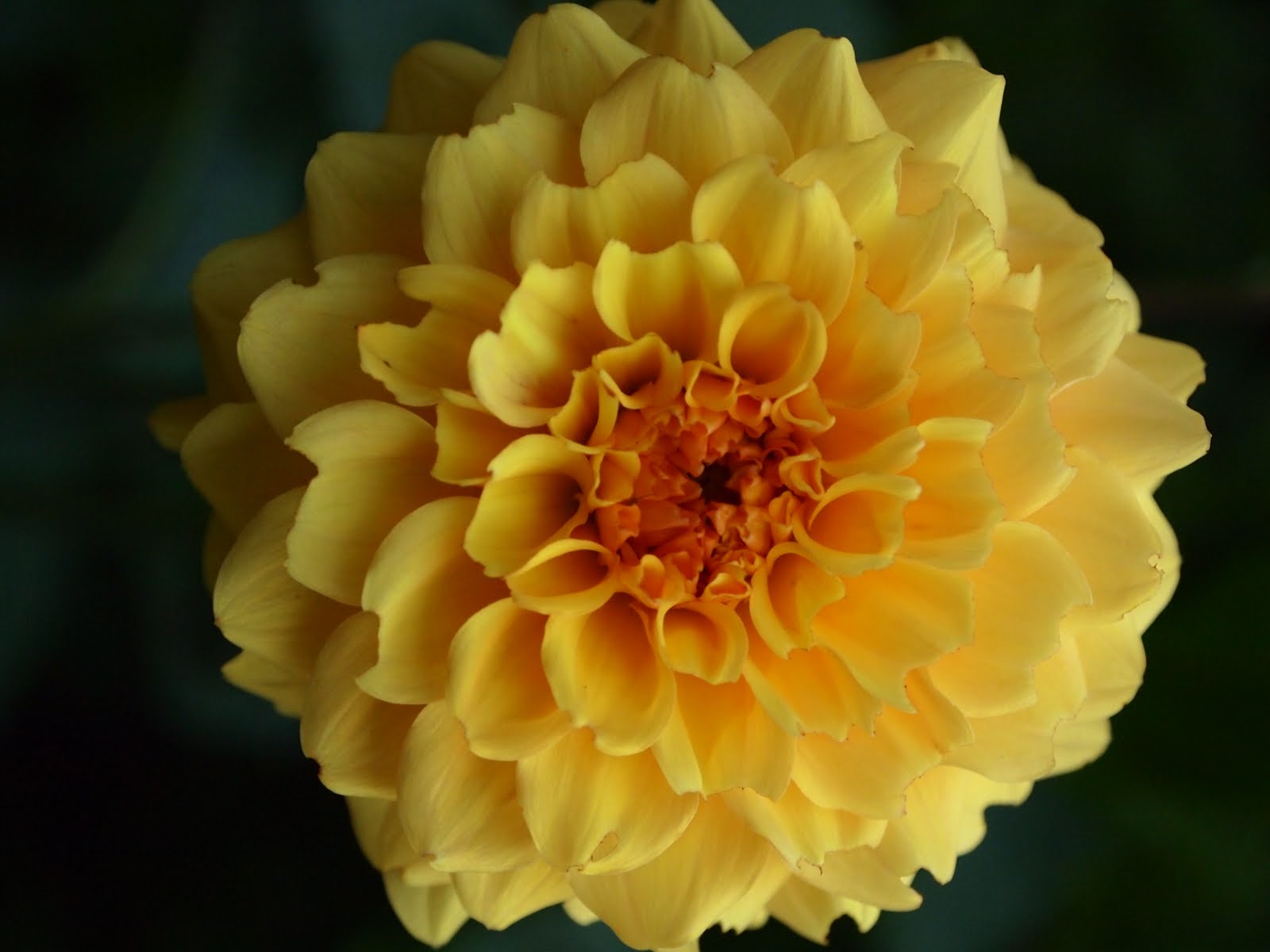
 (Dahlia from the garden. There were all sorts of flowers in bloom, as well as trees in fruit. There was one tree that produced something that looked like a cross between tiny, bluish plums and giant, hard blueberries. I have no idea what it was, but the fruits were all over the ground.)


One evening, I happened to be in the garden just as a flock of jackdaws flew over on their way to their evening roost. I quickly snapped a photo, though without a telephoto lens I knew I had no chance of capturing the birds in any great detail. As it turns out, though, I like the way they look in the distance behind the weather vane; sepia tones are so forgiving:


That's about all there is to say about my time in Rutland/Lincolnshire. I will probably go to Birdfair again next year and, when I do, I am likely to stay in Stamford again--possibly even at the Garden House Hotel, provided they still have those delicious scallops on their menu. If I do find myself in the area again, I hope to leave some extra time for sightseeing and photographing around Stamford, since I know that I only just began to sample all the charms it has to offer.